Insights from D. Brown Management
AI Definition: Prompt
 Steve Jost
July 29, 2026
Steve Jost
July 29, 2026
A prompt is the ask you type: the scope of work you hand the AI tool. The word sounds like a software skill, but this industry already writes the ask for a living - and whatever you leave out, the tool fills in with the most ordinary version of the work.
artificial-intelligence business management definitions technology
Every AI Answer Looks Perfect Under Flat Light
Steve Jost
July 29, 2026
AI output arrives finished, confident, and formatted - which makes it hard to grade. Like a drywall finish under flat light, the flaws only show when somebody who knows the work holds the light. Do the reps, set the standard, then bring in the tool.
artificial-intelligence business management Organizational Development Talent technology
The Apprentice Who Knows Everything – A Look Inside AI
Steve Jost
March 30, 2026
AI tools are powerful, but what's happening inside them? This article opens the hood on how large language models work, using construction analogies to explain why clear direction and good specs matter just as much with AI as they do on a jobsite.
artificial-intelligence problem solving technology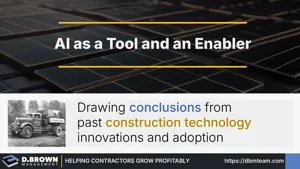
AI as a Tool and as an Enabler
Steve Jost
March 22, 2026
Construction was built on innovations that were met with skepticism first. From the batch plant to the pneumatic nailer, tools that became industry standards started out as unproven ideas that only a few early adopters were willing to bet on.
artificial-intelligence history team building technology