
Don’t allow your teammates to think or say the word CAN’T. This is easier said than done. Avoiding CAN’T requires a combination of leadership, discipline and tenacity with a healthy dose of optimism to avoid.
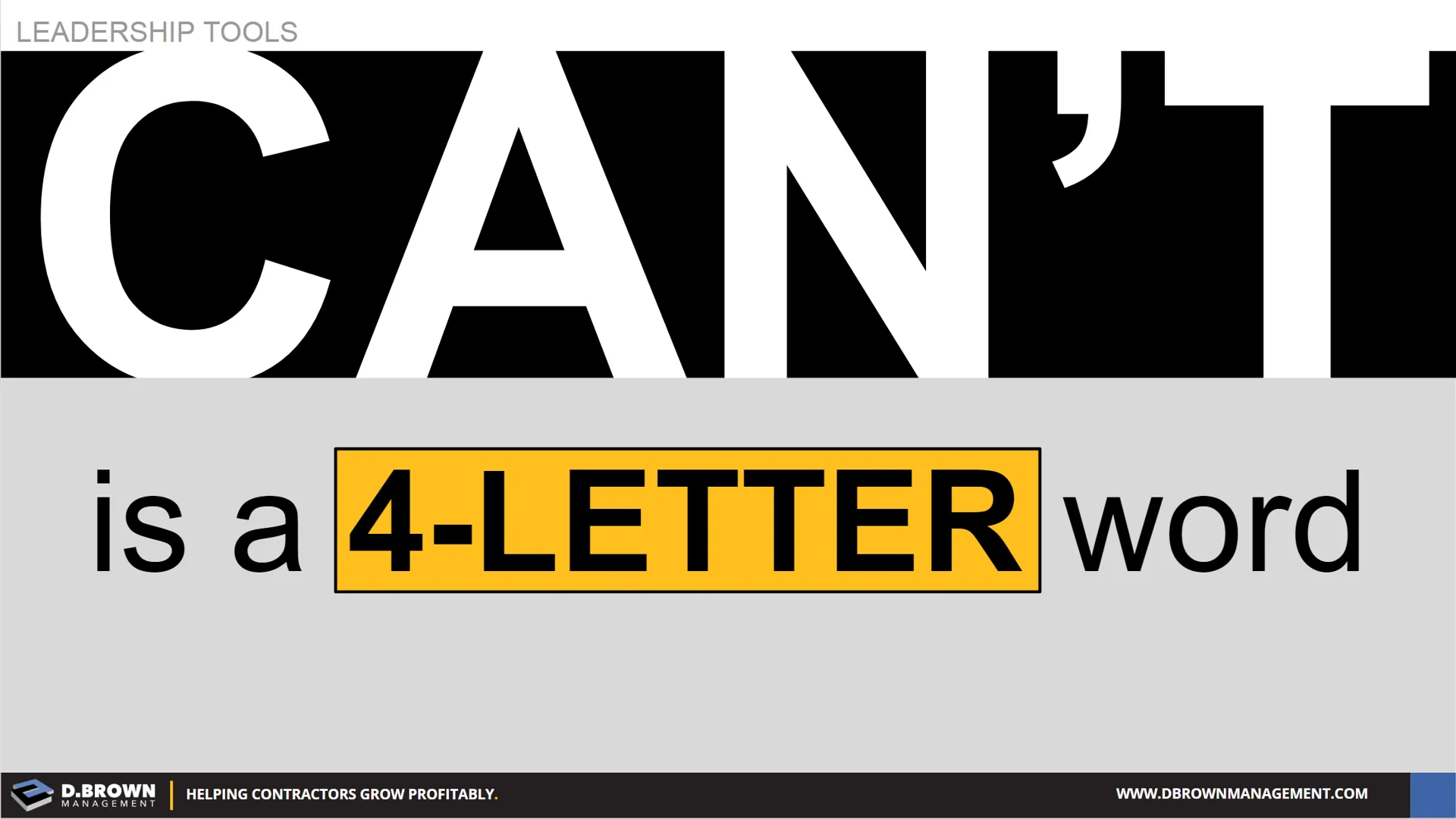
NOT YET is a much better way to frame things.
"Most people overestimate what they can do in one year and underestimate what they can do in ten years."
Bill Gates summed it up perfectly with his quote which is generally about time span. It’s important to understand that all of us have different time horizons over which we are comfortable planning.
These time horizons shorten based on the newness of the subject matter and what level of stress we are under.
Contractors are faced with lots of new conditions including a very tight talent market, changing project delivery methods and rapidly developing technologies.
Leadership requires that steady hand of setting the course - even in the face of uncertainty. Then sticking with that course taking one step forward at a time. Even when you end up falling back two-steps just get back up and take another step forward with a positive attitude. You will get there; just NOT YET.