
You can’t learn to operate equipment without operating equipment every day. You can’t learn to bend conduit without bending conduit for thousands of hours. This is the core of all apprenticeship programs.
When we move people into supervision and management roles we often forget the need to truly practice hands-on to get great at doing something. Individually we might gravitate towards the things we like the most and stay away from those things we aren’t as good at.
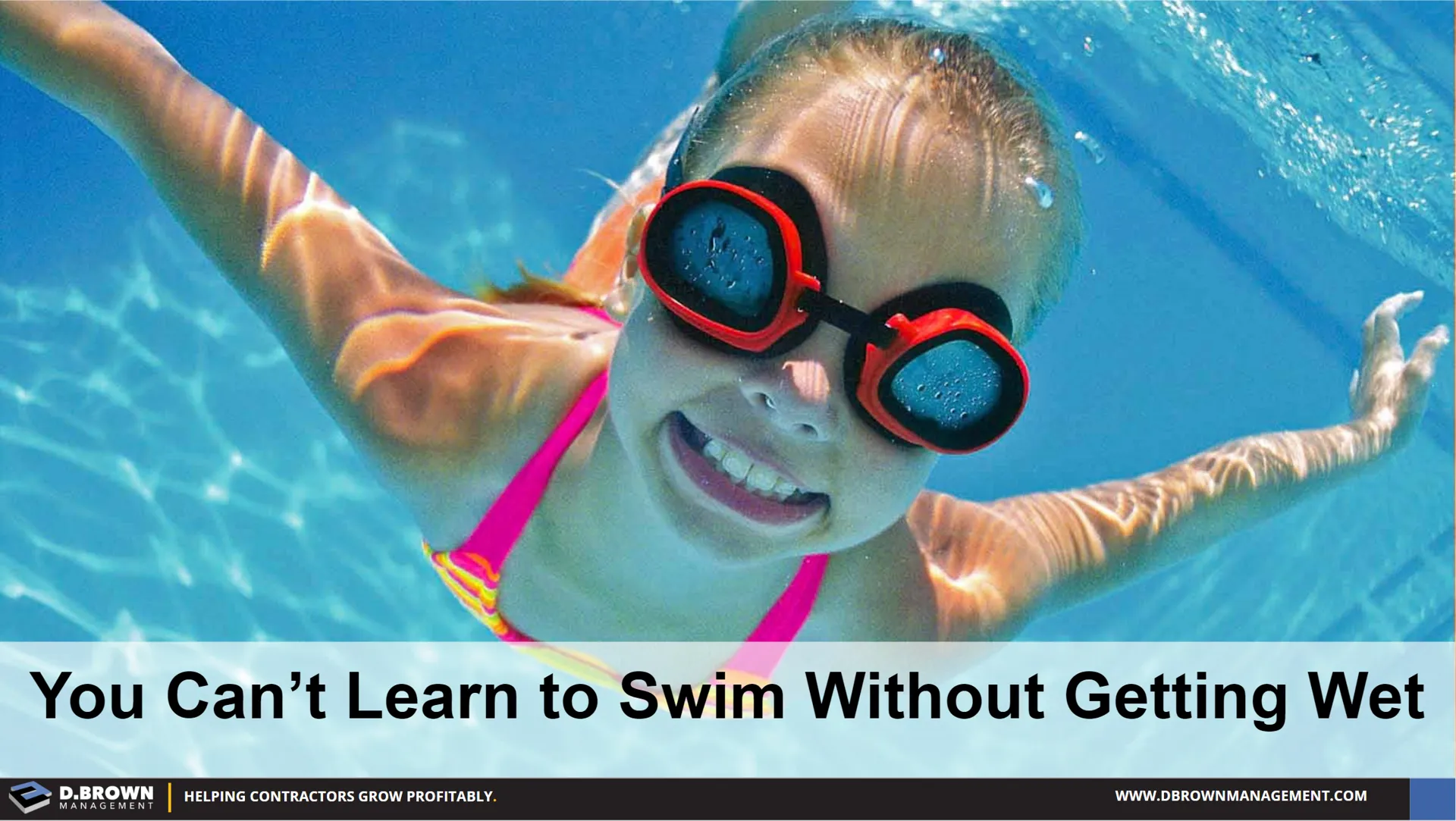
We should remember that most of us don’t like the feeling of the cold water when we first get in. Most kids aren’t running to jump into the water first thing; there is nearly always that hesitation and fear when they are first learning.
Nearly all kids however LOVE to swim after they get reasonably good at it.
Management development training programs need to be as hands-on as our apprenticeship programs to truly have an impact. Individually we must always be focused on jumping into the proverbial cold water knowing that once we gain reasonable competency we will love what we are doing.
Schedule a call to learn how we approach management development for contractors