
For more complex ideas they must be talked about with a team to align everyone. Those are both critical prerequisites however without the act of actually doing something they are 100% waste.
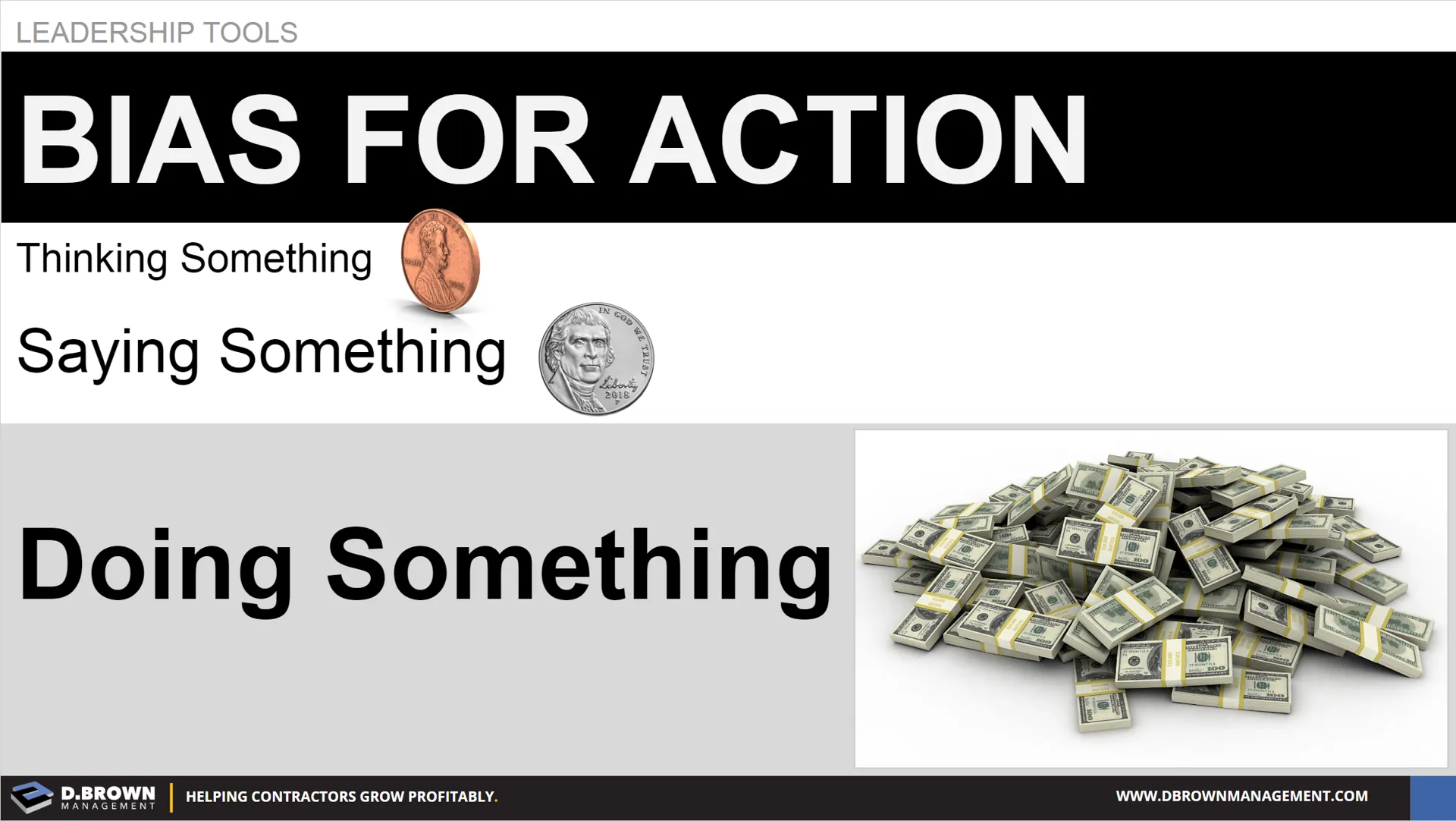
When contractors are starting out the team is small; possibly just one person and this focus on “Doing Things” carries the day. Things move from “Thinking Something” to “Doing Something” almost instantly.
As the team starts to grow many times what is overlooked is that communication becomes critical to align all team members. Meetings, discussions, written processes, etc. are what will help the contractor grow past this point.
As the team grows further it becomes important to develop critical thinking skills in others for continued sustainable growth.
There usually becomes a point in growth and development where the organization seems to lose their “Bias for Action” meaning that they are not recognizing the balance between thinking, talking and doing.
We must also be focused on this balance; for ourselves and for our teams. Many times the act of doing something is much more uncomfortable than thinking or talking about it; especially if it is something new with uncertain outcomes.