
Consider this at all levels of a contracting organization from the high-level vision of where you want the company to be in the next decade then broken down to the operational level and ultimately down to the job description level.
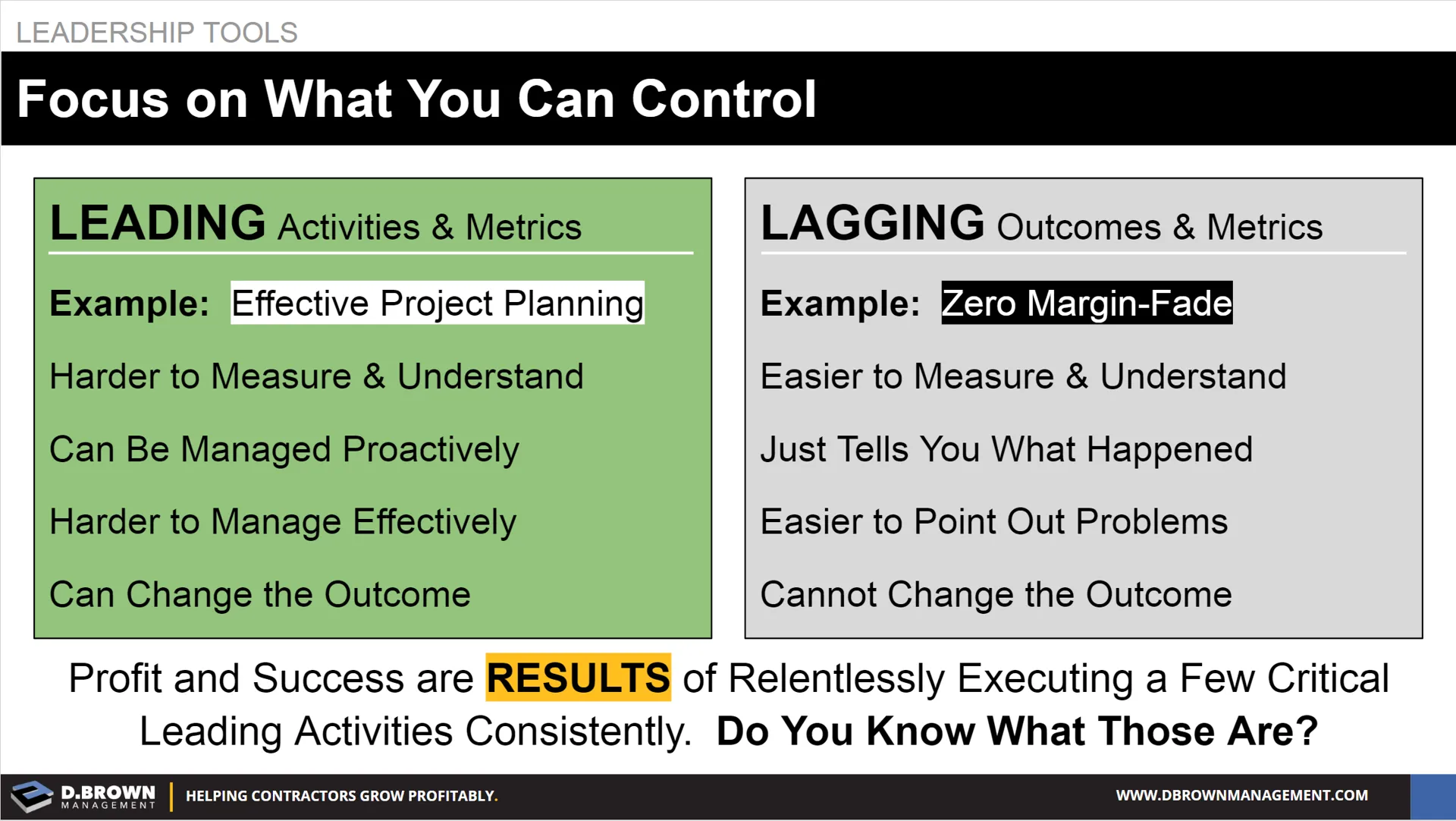
When you get down to the job description level defining the top 3-8 very specific measurable outcomes is incredibly powerful because ultimately your are trading a certain amount of compensation and benefits (inputs) for some very specific outputs. This is very difficult to define clearly and to integrate the various job role descriptions together into a cohesive organizational structure.
It is such a challenge that it is easier to define the job descriptions in either a very general terms or a concise list of routine tasks to be done. Both of these lead to sub-par performance in the long-term.
As challenging as defining clear measurable outcomes is; that is the easiest part. What truly makes an impact is defining the 1-3 Leading Activities with Measurable Performance Metrics that will lead to the successful outcome you are looking for. Managing these leading activities relentlessly every day is what drives truly sustainable performance.