
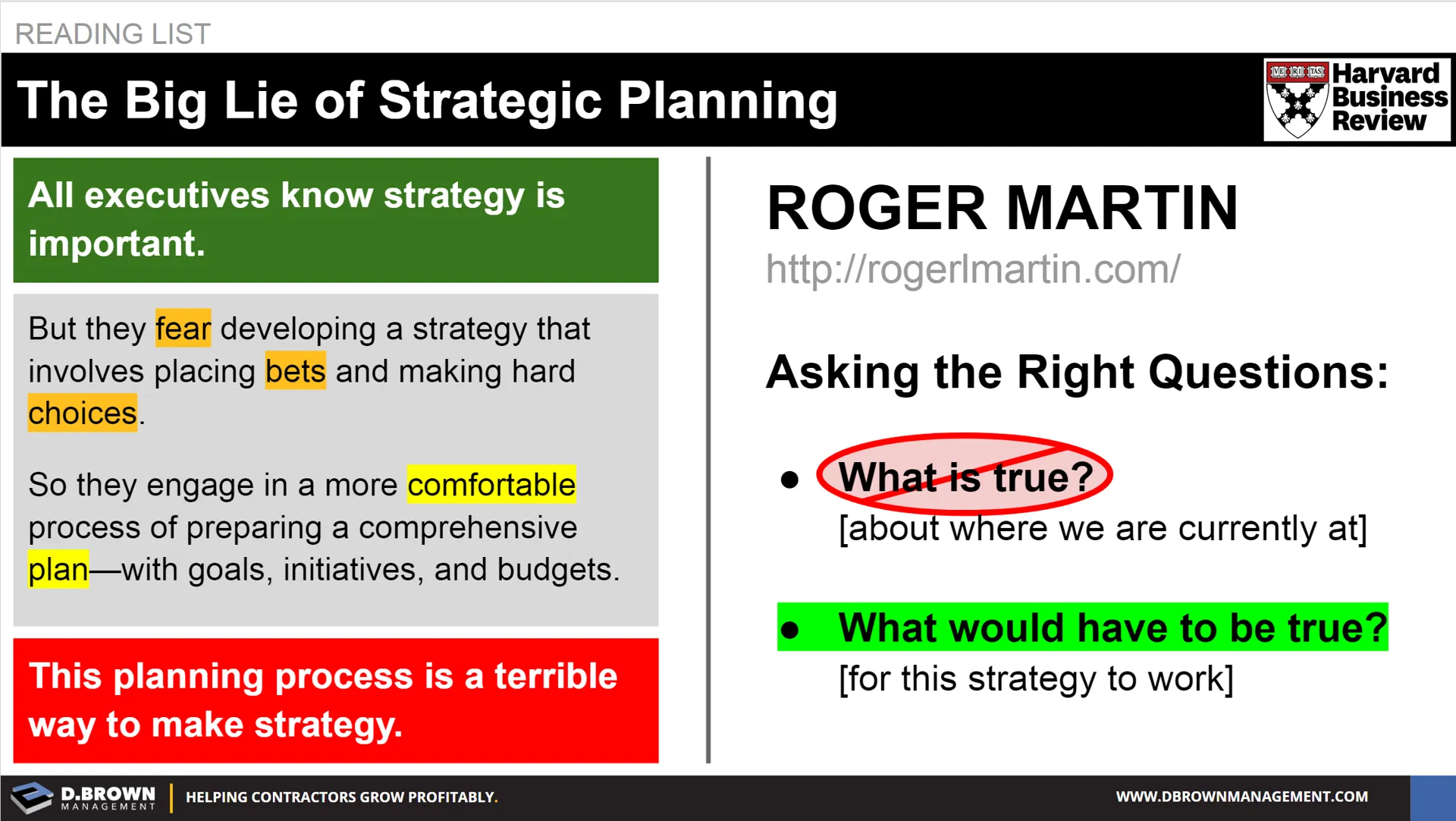
Calling it “Strategic Planning” is the first place that can send teams down the wrong path as Roger Martin describes in this great webinar from Harvard Business Review.
Strategic decisions have always been the most highly leveraged decisions that leaders of contracting businesses make. These decisions are becoming even more complex and critical as the industry is being rapidly transformed by major industry trends including project delivery, technology and talent.
Strategy is about asking what game should we really be playing. Planning is about figuring out how to play that game effectively. This is not a linear process but rather an iterative process going back and forth between strategic vision, alignment of the team, planning within resource constraints. Teams that try to rush through this process as if it were a project usually end up with a simple plan resource-based plan.
We see this frequently with contractors because project planning is 100% about planning with known means, methods and resource constraints. The very skills that make contractors effective builders become a hindrance to true strategic planning.
An experienced 3rd party facilitator is worth their weight in gold during this process. They can keep you on-track truly assessing your capabilities as they compare to the industry. They can broaden your thinking by bringing in outside industry information. They can align your team through structured exercises.
