
It is true that in some cases people hang on to the wrong things for too long but those are much rarer.
There is that saying about eating an elephant and taking one bite at a time. That is also true. Take your “Bigger Goal” and break it down into bite-sized pieces.
You many not even be able to see all the pieces when you start. That’s OK too; just break off a few bit-sized tasks to start and the bigger picture will emerge.
Don’t get analysis paralysis. Life, careers, projects and business are “Fluid Situations” and trying to predict everything ahead of time simply isn’t possible.
As you delay starting while you try to think through an impossible level of complexity; others will already on their way.
“You don’t have to see the whole staircase, just take the first step.”
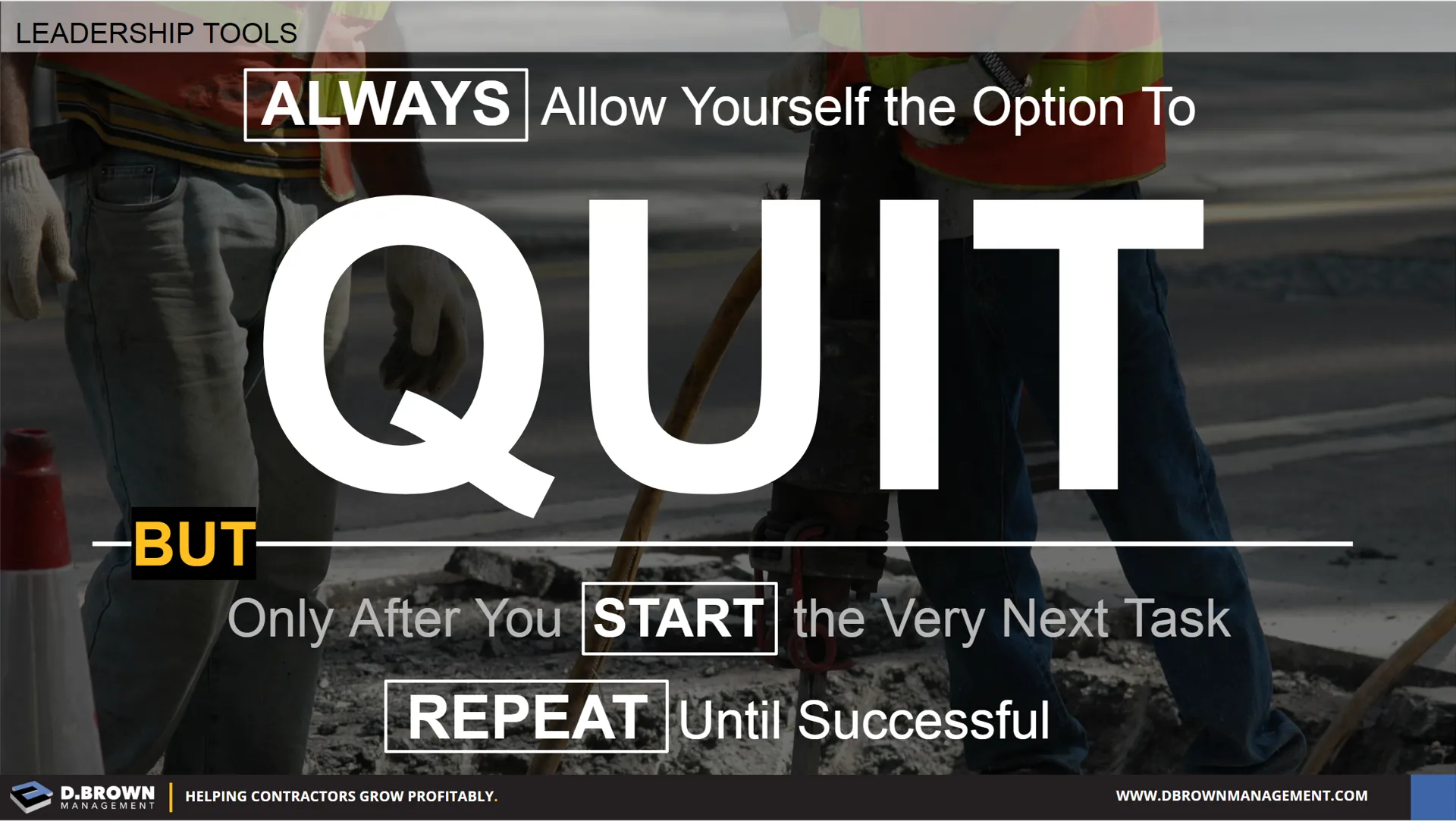
Quitting is something that creeps into nearly everyone’s mind. Don’t try to avoid those thoughts. Just promise yourself you won’t quit until after you just get started on the next task.
Now ask yourself if you REALLY want to quit now or if you can finish this bite?
Most people rarely quit in the middle when they can see the end. They just have trouble getting started because the overall “Big Goal” seems too complicated.
Make sure the bite-sized pieces is measured in minutes or hours so it’s easy to just focus on getting through it.