Accelerating The Pace of Learning

Reading (or listening) to books and book summaries is one of the best ways to learn what others are doing.

D. Brown Management Profile Picture
Share

Closing the gap between where we are and where we want to be starts with learning new things and accelerating the pace of our learning. The challenging part of reading many management books is that they never apply 100% to your particular situation. 
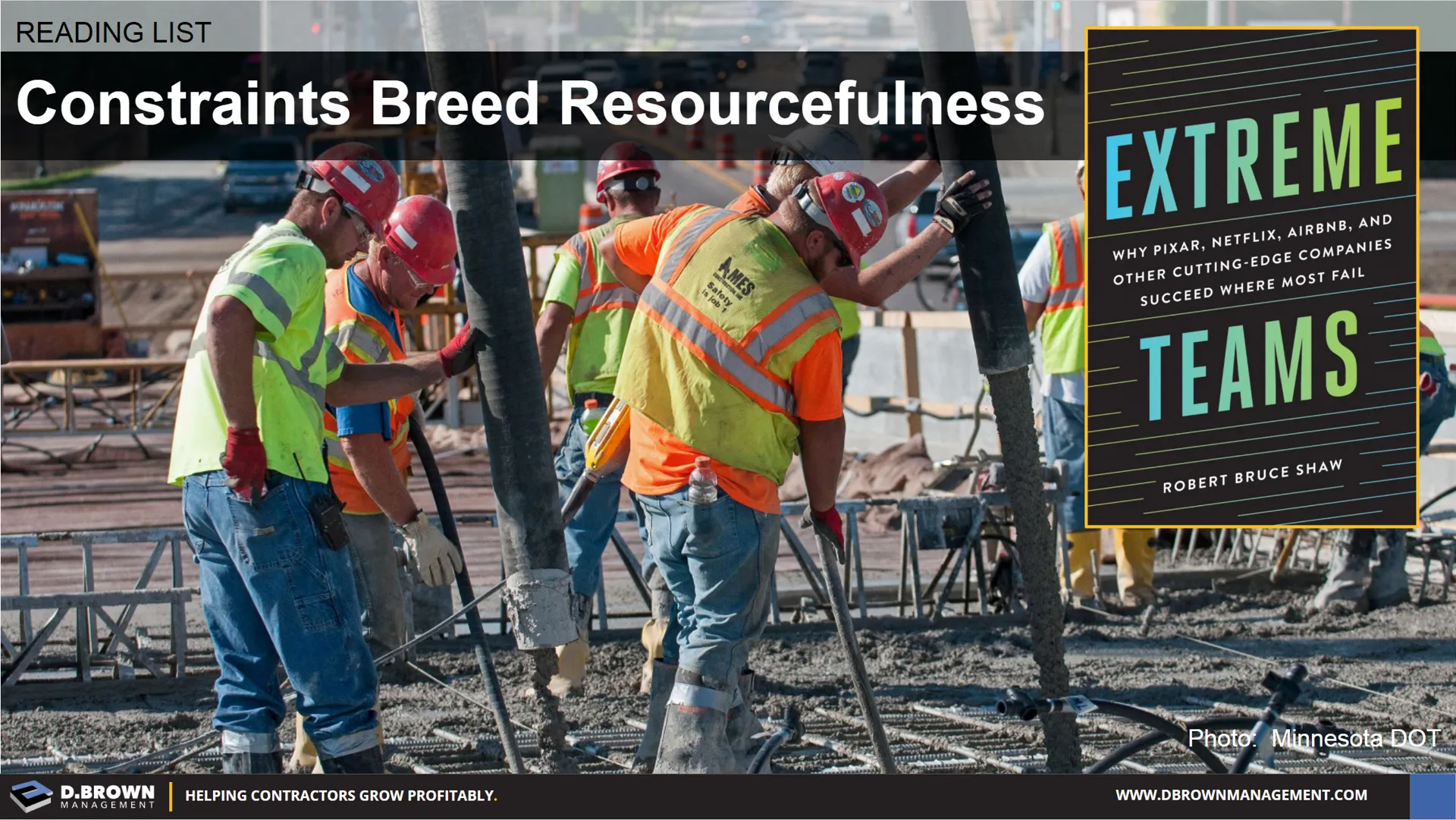
Reading List: Constraints Breed Resourcefulness. Book: Extreme Teams by Robert Bruce Shaw

Extreme Teams was recommended by a client and we work hard to always read anything recommended by someone in our network.  The book has tons of great take-aways about culture and team dynamics in high-performance organizations. We have all enjoyed being parts of these teams and we hear people talking about particular projects years after they were complete.  

This book dives deeper into the leaders and systems that companies have used to scale this high-performance culture from an initial startup team into thousands of people.  Regardless of the current size of your business or your future goals nothing will have a bigger impact than building a team of the right talent.  

Book (Summary)


Schedule time to talk with us and learn more about how we work with contractors to improve team performance


Planning - Integrating the 4 Key Responsibilities
Effective planning combined with regular feedback (at least weekly) combined with a structured look at how to improve each week is the key to integrating the four key responsibilities of a Foreman.
Owner Occupied Real Estate for Contractors - Lease or Buy?
There isn't a simple answer to this question. Much of the advice you will get has bias attached. Start your decision making process by building your own models and making general assumptions while looking into the future. Use this Excel model to start.
Strategic Foundations: What Is Unlikely to Change?
Like construction projects, construction businesses are only as strong as their foundations. Build your strategies around things that are unlikely to change in the long-term (10+ years).