
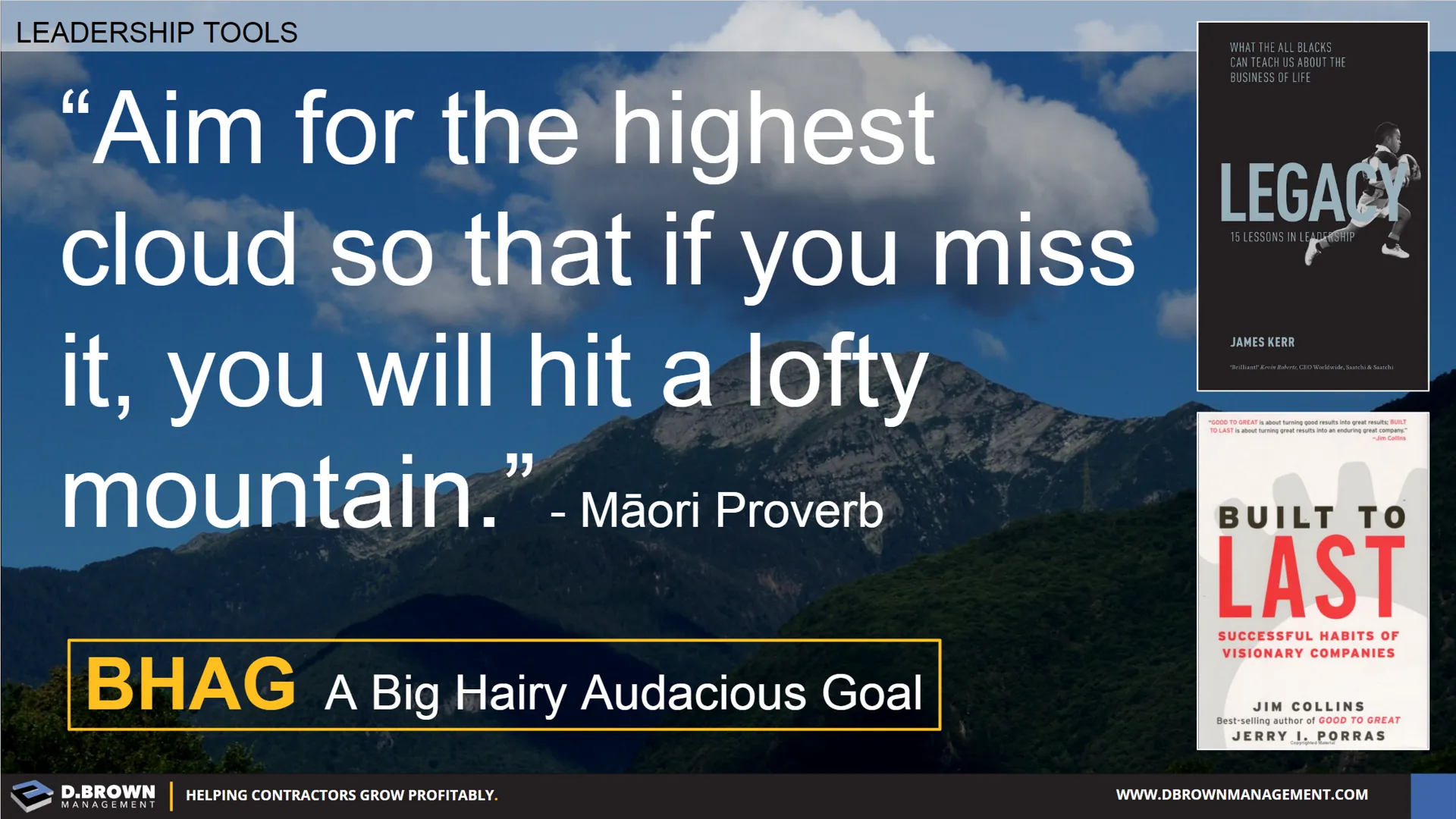
The two ways to look at objectives are Committed and Aspirational.
- Committed: What will we really do; no matter what?
- Aspirational: What’s a goal that everyone gets excited about but is extremely uncomfortable to even say?
“Uncomfortably Excited” is how Larry Page describes these in Measure What Matters
BHAGs - Big Hairy Audacious Goals is what Jim Collins describes them as in Built to Last
The All Blacks set extremely high standards for everything to build their Legacy
Let’s look at something simple like production. If an electrical contractor sets a goal of improving branch raceway installation by 5% that can be worth several hundred thousand dollars per year. It’s totally achievable with Kaizen level process improvements including talent management.
If they set a goal of 50% labor savings they would have to radically change the process starting with the design and interface with other subcontractors. Setting an aspiration like that - in the clouds - and then working relentlessly to get there will force a completely different level of thinking.
This can be worth millions of dollars and a nearly unbeatable competitive advantage. Remember -
“It always seems impossible until it is done.”
