Budgeting the Right Time for New Tools

Have you ever created a tool or process for your company only to find that people aren’t using it effectively and some don’t even know about it?

D. Brown Management Profile Picture
Share
Leadership Tools: Budget Resources for New Tools and Processes Correctly.

If your answer was…

“No - every tool and process we have ever rolled out is being used perfectly 100% of the time by 100% of the team.”   *** 

 then please raise your hand so the rest of the industry can study you or get a job at your company.  :) 


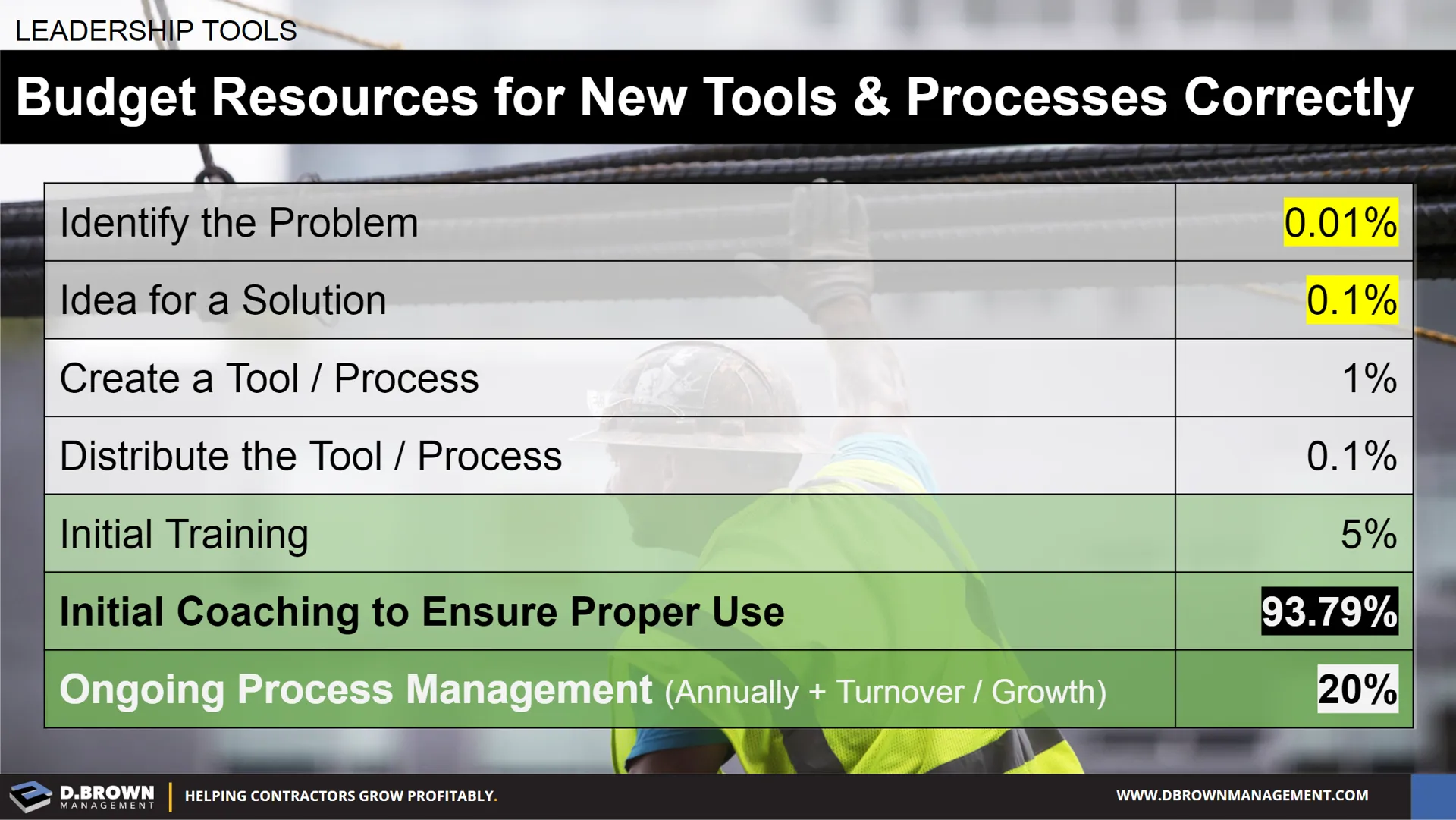
One place to look might be in how you allocate resources to solving the problem.  It’s easy to get caught up in problem identification and creation as the biggest hurdles but these typically make up about 1% of the total effort.  

The real effort is committing the resource for initial training, coaching everyone to minimum demonstrated competency levels and most importantly committing resources to ongoing management of the process.  

If your team does not understand the level of resources required, plan for them and then have the daily discipline to stick to the commitments then you will end up with lots of tools and little impact. 


This is harder than it seems and is something we spend a lot of time working with teams on: https://dbmgt.co/contact


Business Developer (and Management) Hurdles
Finding a customer that will pay you is the first thing a contractor does. Scaling the business development function with growth is one of the most challenging things a contractor must do for sustainability and succession.
Stages of Development - The Seven Habits of Highly Successful People
Building even a simple construction project requires coordinating 100+ people. While we may like to think of ourselves as 'independent,' it is not the highest stage of development.
Lean Principle - 3 Enemies of Lean
Profitable growth comes from operating within a target capacity and capability range - and continually increasing those ranges. Operating with consistent overload, consistent under capacity, or with consistently high variability is not sustainable.