Contractor Exit Strategy 1 of 6: Winding Down or Liquidation

This “exit strategy” can mostly be seen as the lack of a clear exit strategy and plan.

D. Brown Management Profile Picture
Share

The valuation of the business is the worst of all strategies because there is a cost associated with winding down the existing projects and that eats into the book value of the business.  
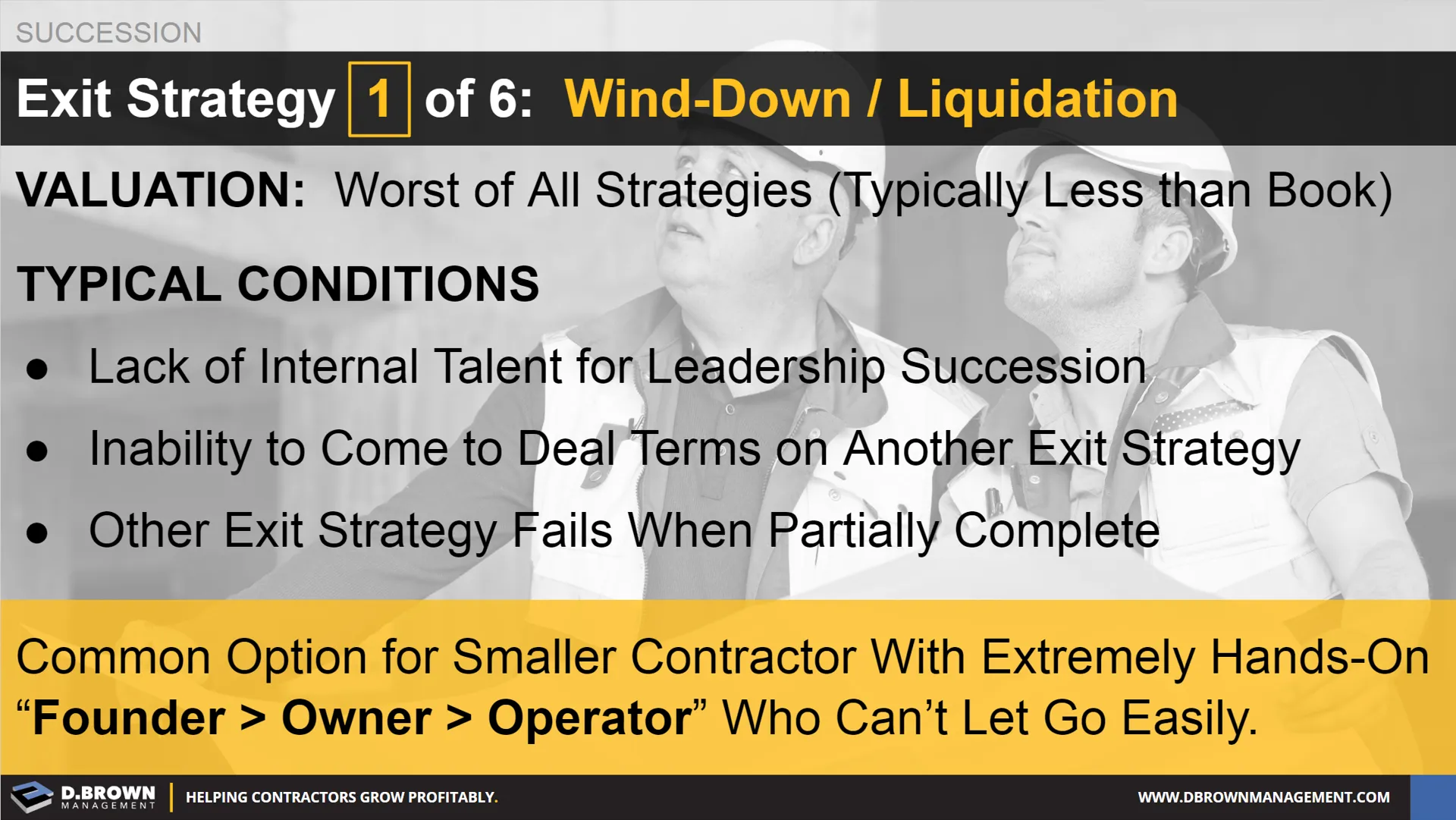
Succession: Exit Strategy 1 of 6 - Wind-Down / Liquidation.

It is a very common option for that smaller contractor with an extremely hands-on owner who is involved in every aspect of the business.  

Most typically, they settled on the wind-down strategy because of some combination of the following:

  • They have not been able to let go enough to build the internal talent capable of continuing the business in their absence.  
  • They were unable to come to deal terms on another of the exit strategies. Most typically this is because they couldn’t settle on a balance of value and control across the major stakeholders
  • They were partially into another of the exit strategies and the deal failed with control of the business reverting back to them.  

The great news is that because of the hands-on nature of these business owners, they can typically manage the wind-down very efficiently which ultimately, preserves the majority of their capital.  

The biggest losers in this scenario are typically the employees who must find another team and the customers who must find another contractor to serve their needs.  


Contractor Exit Strategy 1 of 6: Winding Down or Liquidation
Continue building value in your business, yourself and your key team members with a good succession strategy....

Contractor Exit Strategy 1 of 6: Winding Down or Liquidation
Continue building value in your business, yourself and your key team members with a good succession strategy....

Contractor Exit Strategy 6 of 6: Sale to Employees (ESOP)
Contractor Exit Strategy 6 of 6: An ESOP (Employee Stock Ownership Plan) is a qualified defined contribution employee benefit plan designed primarily to invest in the company’s stock.
Creating Value
Know the difference between creating real value versus creating transactional value. Creating wealth and not just re-allocating it is the path to sustainable growth. Understand the differences and how to incorporate them into your strategy and planning.
16 Reasons for Scoreboard and Scorecard Failure
Keeping score is foundational for success in construction, sports, and many aspects of life. Too frequently, scorekeeping fails to deliver improved results. Here are the 16 reasons why from the changes required by growth through systems and management.