
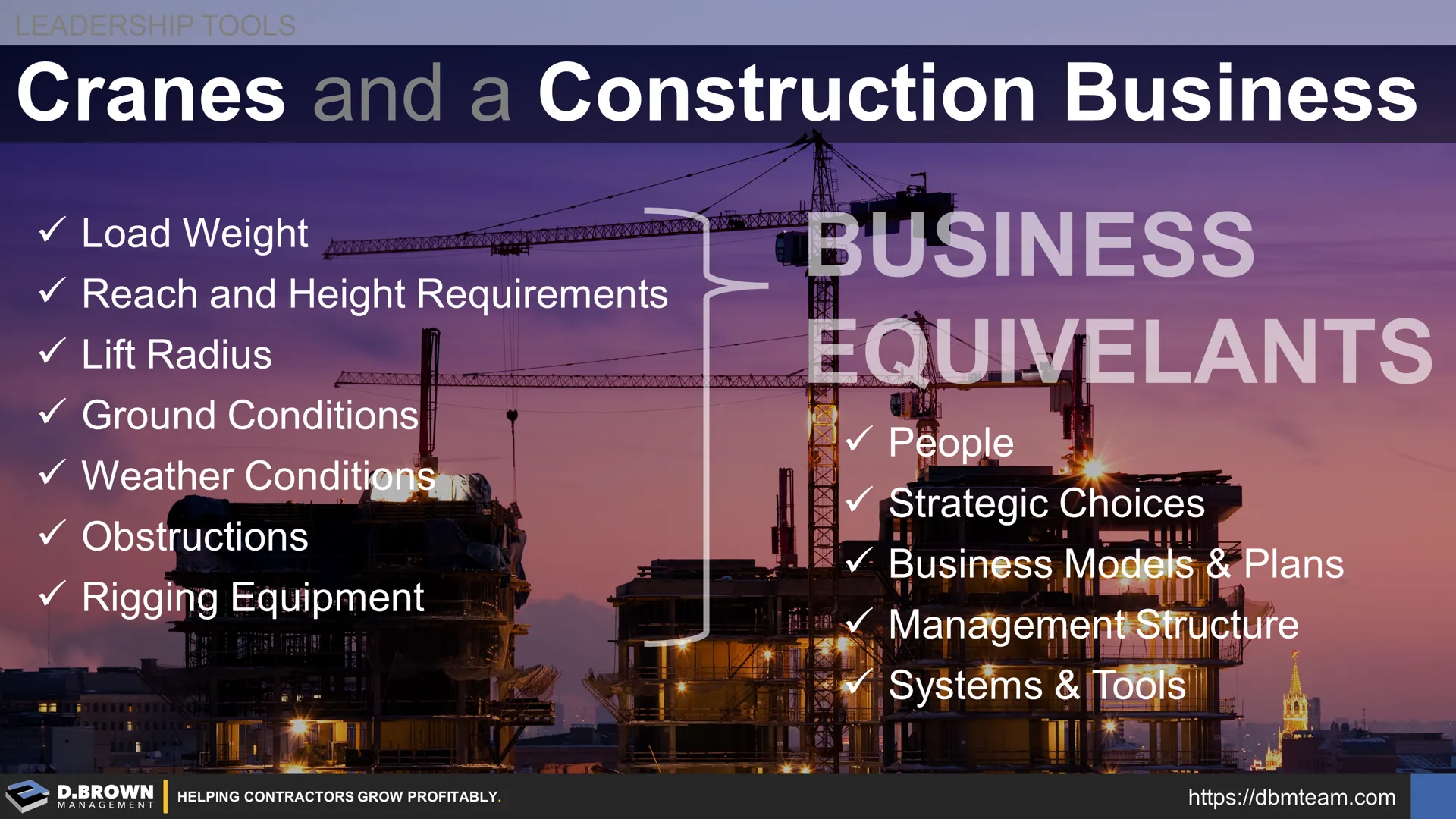
Think about the planning, math, and approvals around every load that a crane picks up on a jobsite, including:
- Load weight
- Reach and height requirements
- Lift radius
- Ground conditions
- Weather conditions
- Obstructions
- Rigging equipment
Now think about the construction business equivalents:
- Your people - the most finite resource, all with unique skills and desires
- Your strategic choices
- Your business models and plans
- Your management structure - right people in the right job roles
- Your systems and tools including technology that support everything
Are you putting the same degree of intentionality into each one of these areas that you do for a crane lift?
The difference between a crane on a jobsite and your business is that there is a lot of regulation dictating what is expected out of every lift and the risks are very high.
Inside the business, it is leadership that determines the discipline put into each of the five above. This is part of the evolving leadership focus required at each stage of growth.
As you are navigating growth as a company, it can be invaluable having an experienced and unbiased third-party keeping pressure on your vision.
All relationships start with a simple conversation - let's talk.
