Death From Indigestion - Sustainable Growth

Many contractors are faced with a nearly overwhelming amount of profitable work in the current economy.

D. Brown Management Profile Picture
Share

Many are posting record bottom-line profits helping their balance sheets recover from the recession.  
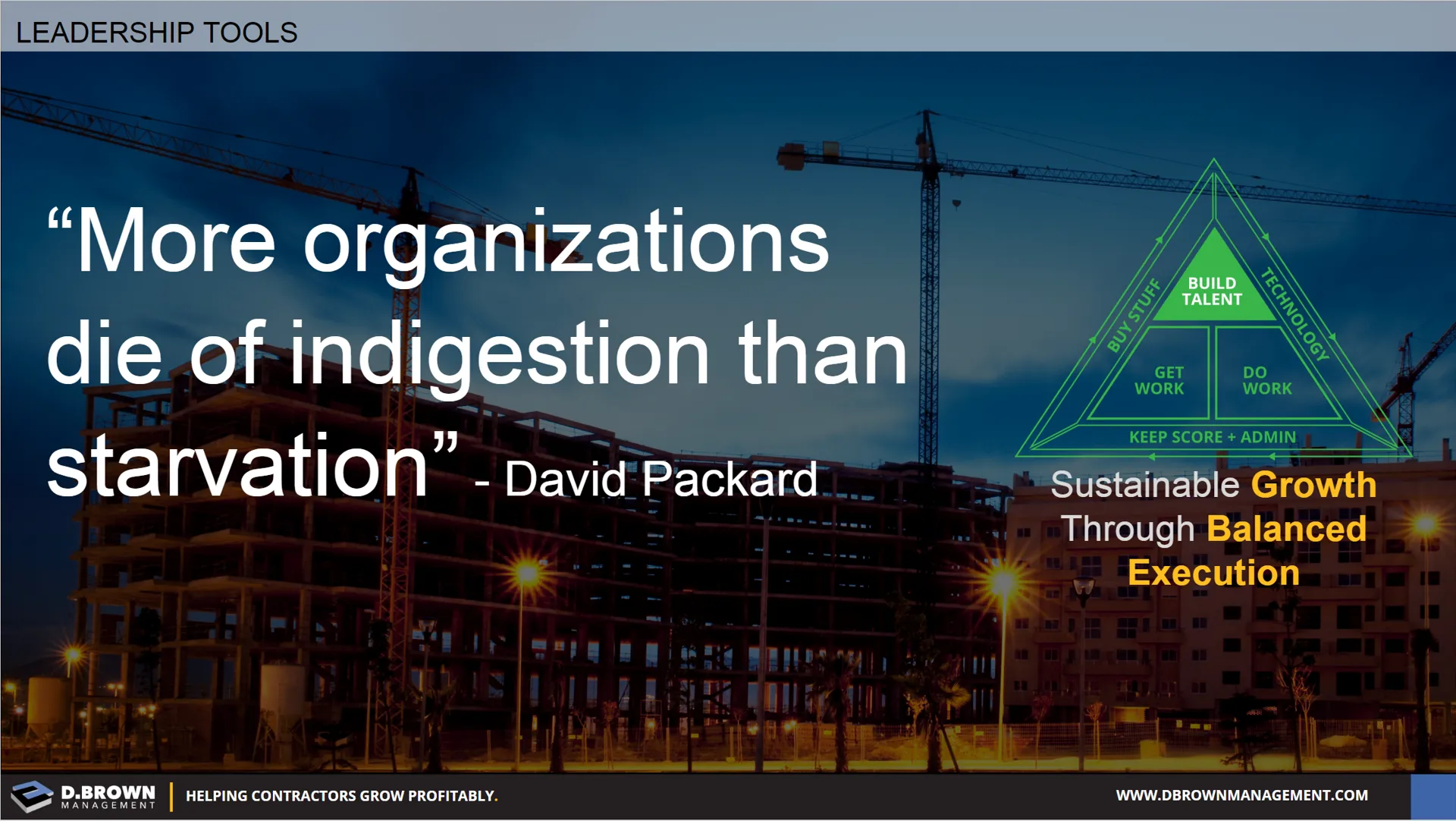
Quote: More organizations die of indigestion than starvation. David Packard.

With that it is important to remember the critical observation from David Packard:     

 “More organizations die of indigestion than starvation” 

Toyota is a very strong company with an amazingly strong culture and even they weren’t immune as they pushed their worldwide expansion a little too quickly.  Toyota was far from death but they did have some operational and quality problems. 

The ultimate root cause was discussed in Developing Lean Leaders at All Levels:  Their rate of revenue growth outstripped the rate they could develop their leadership (talent).  


Will the markets you are in today support you through the next cycle in the economy?  

Do you have a predictable way to develop new business - even in a tight economy?  

Are you investing enough today in building your competitive advantage for tomorrow?  

How does your talent acquisition, development and retention compare to your growth rate and your competitors?  

Learn more about sustainable growth for contractors


3 Facts About Ownership Transition Deal Structures
The Deal Structure including dollars, timing, terms, legal entities, taxes, and contractual documents is the most tangible part of the transaction. The Deal Structure WILL NOT do three very critical things - Cash, Capabilities, and Trust.
Capital Constraints to Growth (The Basic Formula)
Capital is one of the three primary growth constraints for construction contractors. Use this simple formula to determine how much of your pre-tax net profits need to be retained in the company to support growth and to establish your safe growth limits.
Governance Structures Enabling Ownership Transitions
Governance structures including the board of directors, policies, information flow, operating rhythm, and decision rights must continually evolve through each stage of growth and ownership transition. The first board is typically driven by a transition.