Discipline = Agility

Far too many construction teams believe that standard processes, routines, training and disciplined execution will stifle their creativity.

D. Brown Management Profile Picture
Share

It is actually quite the opposite and when you flip that switch in thinking it begins to unlock amazing levels of performance.
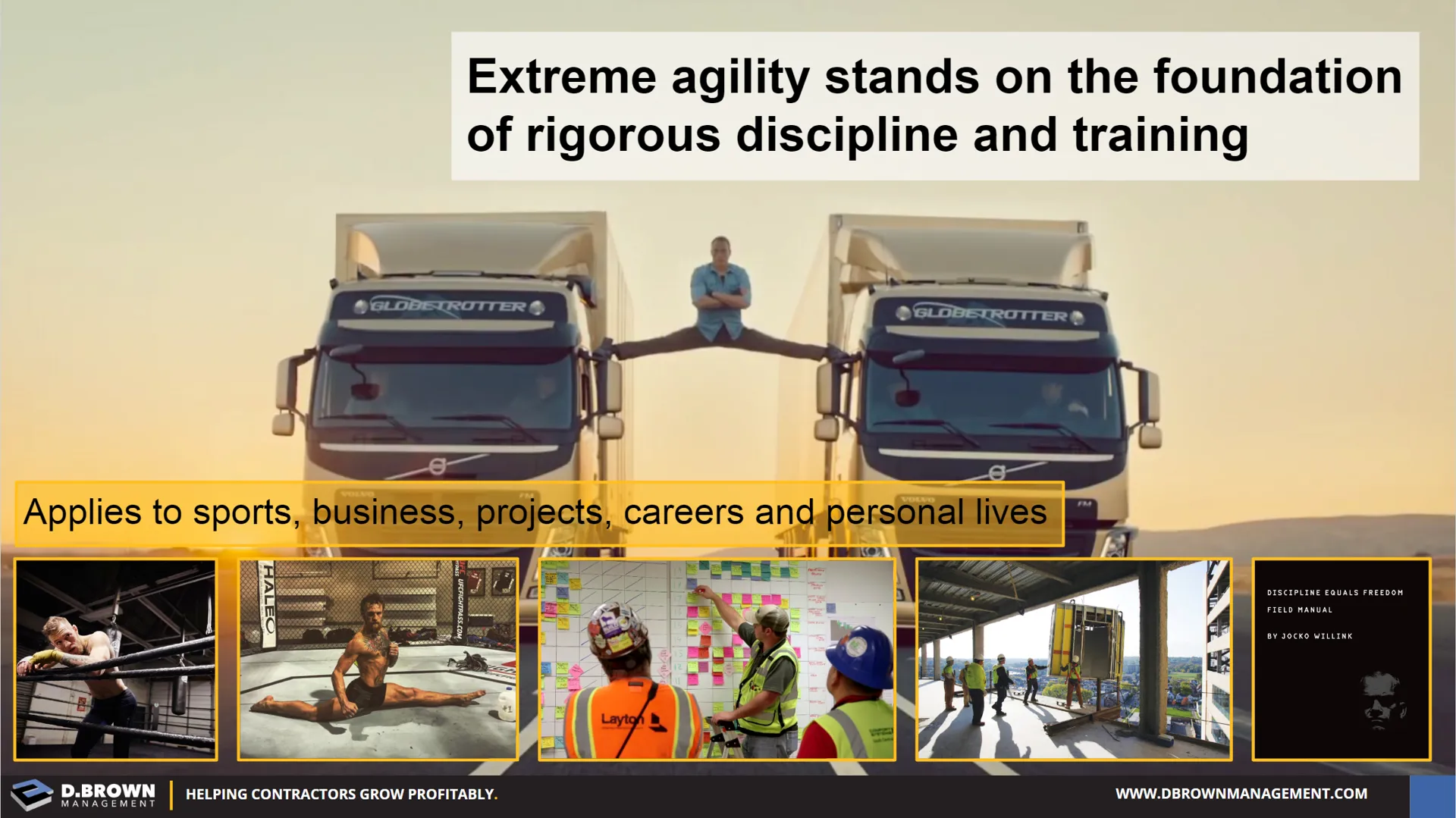
Extreme agility stands on the foundation of rigorous discipline and training.

For most roles on the project team at least 90% of what we do falls within the lean definition of “Standard Work”.  Imagine a project team trained so well that they executed 90% of their work without much conscious thought - the equivalent of muscle memory.  

Boring right?  Wrong!  

The magic is that now the project team can put 100% of their creative problem solving towards the 10% of work that requires it the most.  This is the 10% of the work that adds the most value to the customer and to your company.


How much of your team’s creative problem solving and energy goes towards fixing things that should have been handled right the first time?  

What problems are not getting solved or are getting solved poorly because they are so busy working on other things?


Discipline Equals Freedom

Contact us to learn more about how we help contractors develop their teams. 


The Journey (Length, Complexity, Ambiguity, and Guardrails)
Nearly everyone can get in their vehicle and drive to a destination at the end of a two-lane road. No single person can look at open land, select a place to build a city, build that city, build the infrastructure including roads, and build the vehicles.
Weekly Percent Planned Complete (PPC) and Project Performance
Improving the project planning and delivery process starts with improving predictability around the schedule. Nearly every Superintendent and Foreman is familiar with the Short-Interval-Plan (SIP) and typically fill one out weekly looking ahead 1+ weeks.
Inspiring Communication as a Leader
JFK used words effectively to reframe mindsets to great effect with lessons all leaders can use. What can you take away from this for your next communication with your team?