Fixing a Messy Teenage Bedroom

Most parents will teach their kids how to keep a clean bedroom through a combination of leading by example, training and daily management until the kids form their own good habits.

D. Brown Management Profile Picture
Share

There is a balance that has to be struck between letting the child have some freedom of what they put in their room versus the standards of cleanliness and organization expected by the parent.
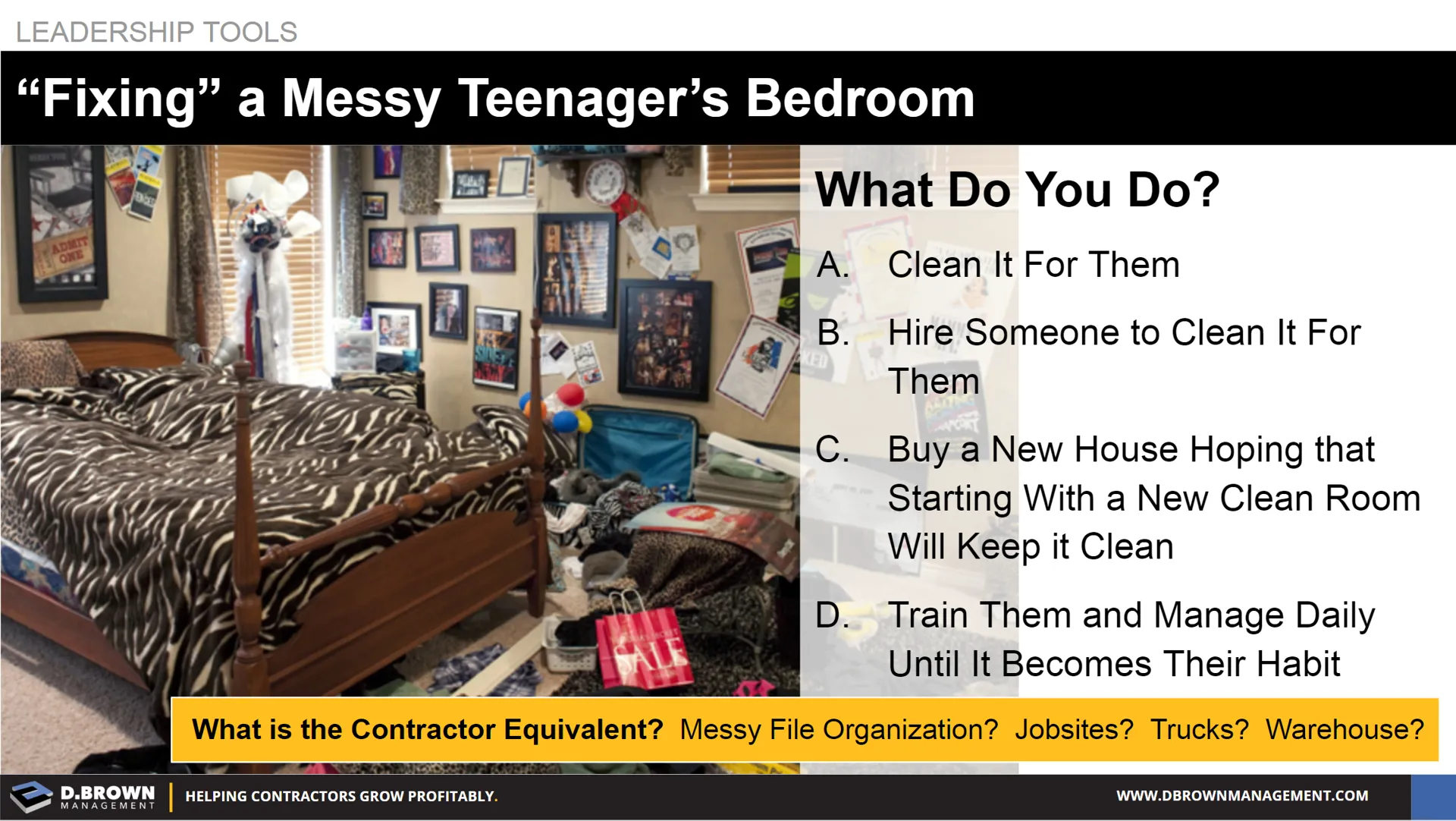
Leadership Tools: "Fixing" a Messy Teenager's Bedroom. What is the Contractor Equivalent?

Some parents will choose to clean to room themselves, have a housekeeper do it or just let it be and “hope” that the child will form better habits on their own down the road.  Those are all REALLY bad strategies and will most likely cause problems down the road.  

It is unlikely that any parent will ever think that buying a new house so the child can start off with a clean room would be a good idea.

We see contractors every day though that expect that buying a new shiny tool, truck or piece of software will solve discipline problems.  For example; if a project team has poor document control disciplines then buying software like Plangrid which is an excellent tool will simply create the same mess but in a different format.  

It is lean tools like 5S that solve these problems at the organizational level.  Remember that it will always be PEOPLE >> WORKFLOW >> SYSTEMS and not the reverse.


Change Tracking Log & Management
Great change management starts with a good tracking system. The far more important part of change management is the rigorous review process at least 2X monthly with your PMs that will limit your risk, increase your opportunities, and train your team.
Customer Strategy Intersection
Having an effective market strategy is the #1 thing a contractor can do to ensure sustainable and profitable growth. For your strategy brainstorm the following and look for intersections:
The Capability and Market Balance (The Chicken or Egg Dichotomy)
Sustainable growth for contractors requires balancing capabilities and capacity with the available market. Like balancing on the toes of one foot, balance is not a static relaxed state. It requires focus, continuous adjustments, and deliberate practice.