
There are multiple lessons in here that all leaders can use to inspire, improve engagement and attract talent to focus on a cause.
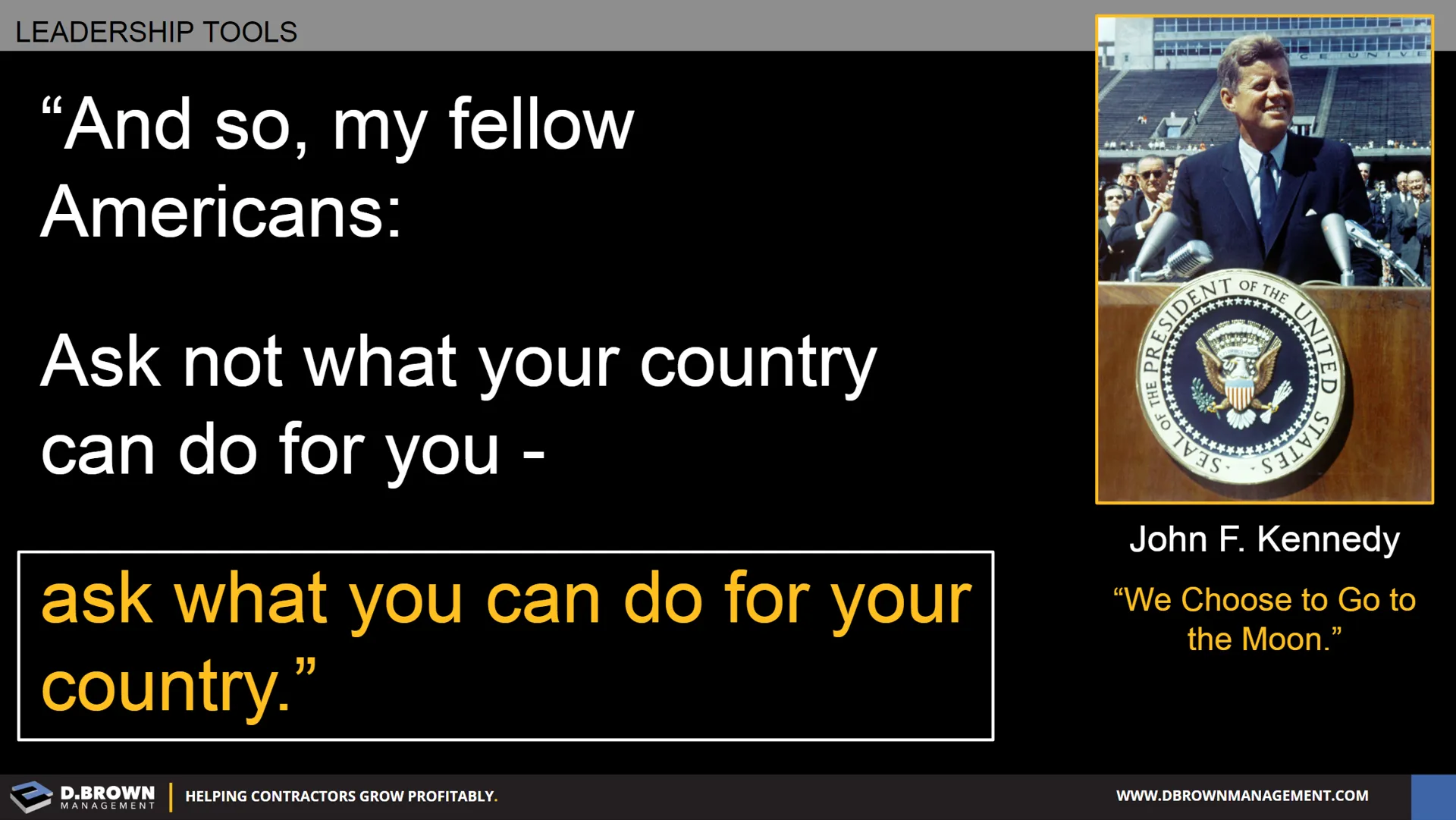
- Framed where we have been and how far we have come in a time span that most people can relate to condensing the history of mankind’s recorded history down to 50 years.
- Forced people to look internally for their locus of control by asking them what they could do for the country. This is what Marshall Goldsmith describes in his book Triggers and 6 Daily Questions that improve engagement.
- Repeated himself over and over. In just the short clip “We choose to go to the moon” as repeated 3X. Messages aren’t often heard or understood until they are out there 10+ times presented in different ways. Great leaders repeat themselves constantly.
- Set out what elements of the vision he could in crystal clarity including very specific details of what “Mission Accomplished” would look like.
- Stated clearly that both the goal of the moon and “other things” would all get accomplished. Having major goals or improvement initiatives does not mean regular business doesn’t get done.
- Promoted the fact that it was hard and that was good thing. People thrive with the right levels of stress and the accomplishments that come from hard work provide long lasting joy in people.
What can you take away from this for your next communication with your team?
