Issue 9 of 9: Low Barriers to Entry

Construction Ownership Transition Issue 9 of 9: There are Few Barriers to Entry for New Contractors.

D. Brown Management Profile Picture
Share
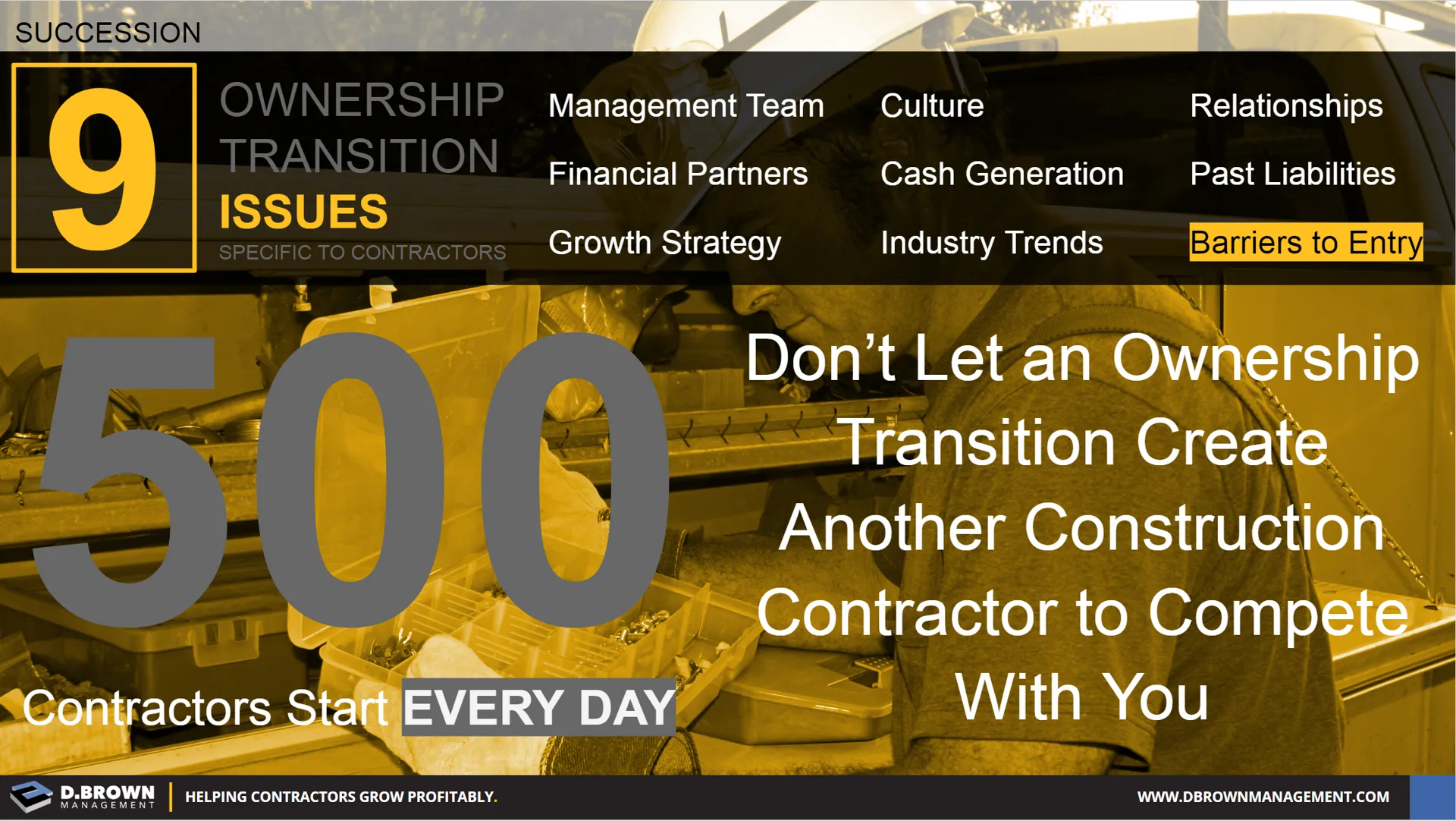
Succession: Ownership Transition Issues - Number 9 Barrier to Entry. Don't Let an Ownership Transition Create Another Construction Contractor to Compete With You.

About 500 construction contractors start up each day.  

  • Many of those are just people having an “entrepreneurial seizure,” as Michael Gerber describes in The E-Myth Contractor.  
  • A few of these will have the grit and skills to build the ENR Top 400/600 contractors of tomorrow.  
  • Others are experienced construction executives who will go on to build substantial construction businesses relatively quickly.  
  • In most cases, a new contractor starting up will cause a serious talent drain on the contractor they leave, as well as changing the competitive landscape.

Make sure that your ownership transition plans don’t create another competitor.  


Issue 9 of 9: Low Barriers to Entry
Continue building value in your business, yourself and your key team members with a good succession strategy....

Issue 9 of 9: Low Barriers to Entry
Continue building value in your business, yourself and your key team members with a good succession strategy....

From Financial Management to Business Management
As contractors go through different stages of growth it often makes sense to expand the financial management role into more comprehensive business management role. At exactly what stage a contractor starts to expand this role depends on.
Continuous Improvement - Takes or Saves Time
I am too busy to learn to improve the process! This statement is only funny because it is so true. It is one of the first mindsets you have to break within yourself and then within your team if you want to achieve consistent operational excellence.
The Capability and Market Balance (The Chicken or Egg Dichotomy)
Sustainable growth for contractors requires balancing capabilities and capacity with the available market. Like balancing on the toes of one foot, balance is not a static relaxed state. It requires focus, continuous adjustments, and deliberate practice.