The Business of Building Series

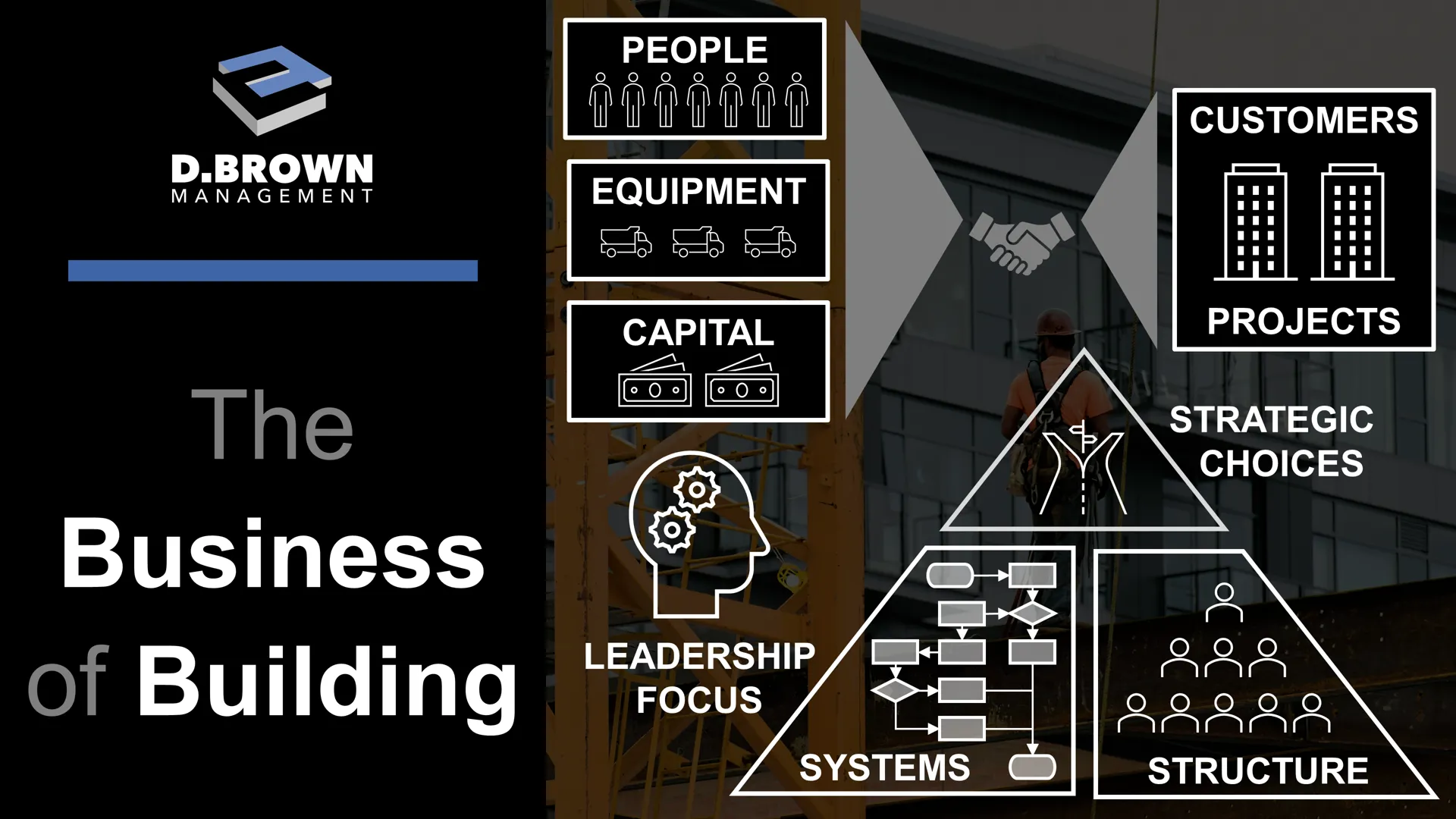
Building projects requires technical expertise and resources. Building a construction business is about developing and aligning those capabilities with customers. Growth and time require different leadership focus, strategies, systems, and structure.

D. Brown Management Profile Picture
Share


Article Image


YouTube  |  Spotify  |  Apple  |  Audible 


This is a series of training, discussions, and resources that apply to contractors at all stages of growth. These include the what, how, and why levels of training and resources. We will cover most aspects of growing a contractor's business. The discussions include real-world examples of application and outcomes, both good and bad. 


  1. Stages of Construction Contractor Growth (Intro)
  2. The Construction Contractor Business Model (Intro)
  3. The Talent Value Stream (TVS)
  4. Job Role Transitions (Intro)
  5. Prioritization Basics
  6. Job Role Description Basics
  7. Strategic Decisions at all Levels
  8. Scoreboards and Scorecards (Intro)
  9. Building Strength-Based Teams (Intro)
  10. Management Systems (10 Principles)


The Business of Building Series
Building projects requires technical expertise and resources. Building a construction business is about developing and aligning those capabilities with customers. A series of discussions about all elements of a construction business at all stages of growth, including real-world examples of application and outcomes both good and bad....

Related Training
The Business of Building Series
Building projects requires technical expertise and resources. Building a construction business is about developing and aligning those capabilities with customers. A series of discussions about all elements of a construction business at all stages of growth, including real-world examples of application and outcomes both good and bad....

3-Year Business Planning (Basic Overview)
Your 3-Year Business Plan is the equivalent of a Short-Interval-Plan (SIP) on a construction project. It sets specific objectives and key results for the whole team. It allows you to plan your resources and know if you are on track or not.
Definition - Decision Rights
Decision Rights define the business decisions that need to be made, who is involved in making them, and how they will be made through processes, tools, and operating rhythms.
Evaluation: Stage of Growth + State of Management Team & Systems
Management teams and systems develop through three phases at each stage of growth. Use these 7 steps to evaluate where your team is at.