
“The single biggest problem with communication is the illusion that it has taken place.” - George Bernard Shaw
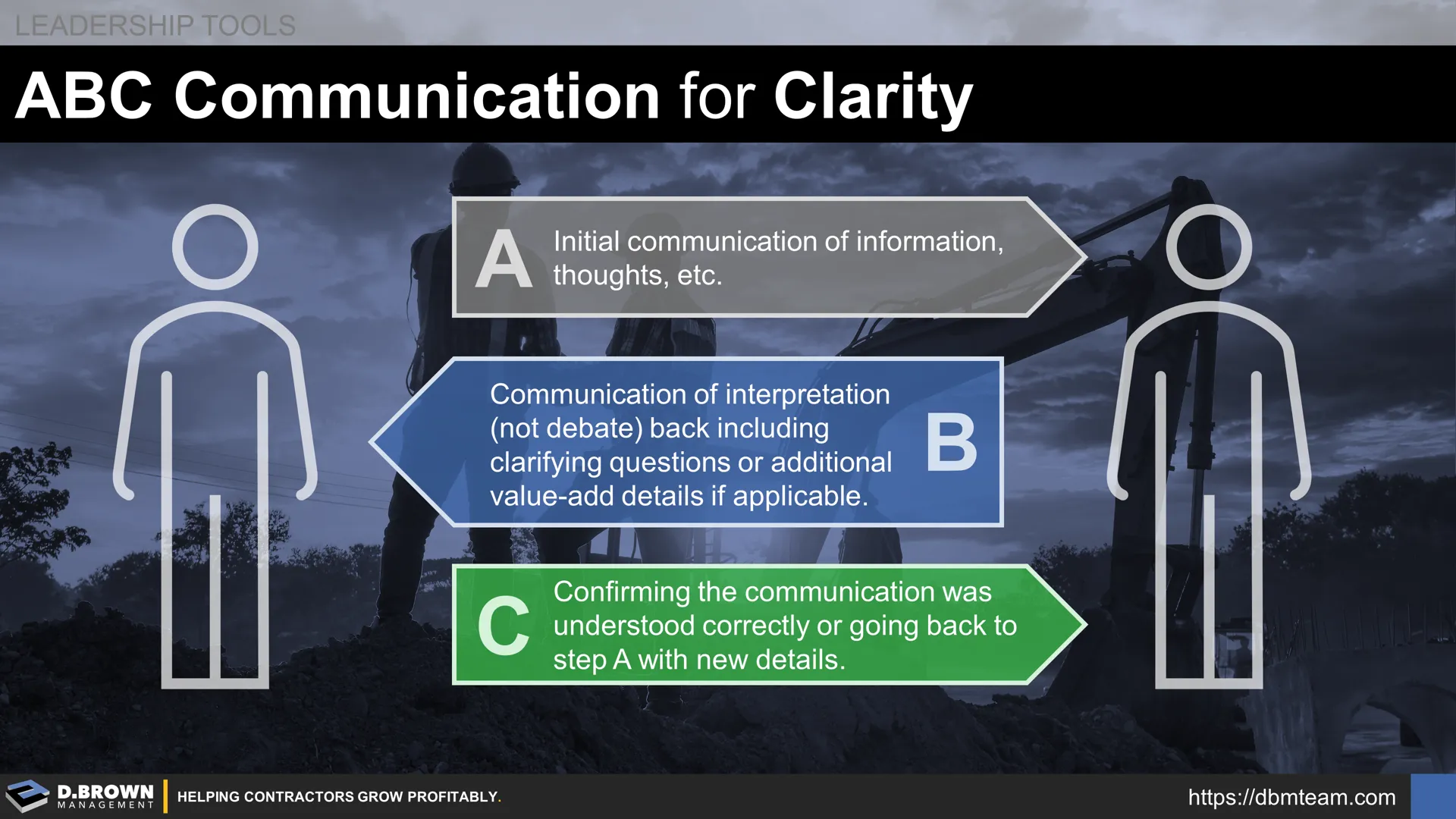
Think about communication as an ABC process:
- Your initial communication of information, thoughts, etc.
- The other person(s) interpretation (not debate) of that information, including the adding of additional value-add contextual details they have, how they will use the information to take an action or make a decision, and clarifying questions if applicable.
- Either confirmation that the communication was understood correctly, or going back to Step A with additional details or a different approach.
David Marquet describes this as "Certify Don't Brief" in his book Turn the Ship Around! about his command of the USS Santa Fe (SSN-763), which was one of the worst performing submarines in the fleet when he took it over. A couple 1-minute videos (part 1, part 2) describe the basics, but the book is well worth a read.
Related Tools for Expanding on the Basics of ABC Communication
Think about how ABC Communication applies to:
- A Foreman laying out the crew each morning (ABC Daily Planning).
- A Business Developer building a relationship or exploring a potential opportunity.
- A Project Manager moving change orders from identified through to paid.
- Recruiting, training, retaining, and developing team members at all levels (Talent Value Stream).
