Project Delivery - Design-Build

In the Design-Build method the project owner has a single contract with the general contractor who then has contracts with the architect and trade contractors.

D. Brown Management Profile Picture
Share

The Design-Build method of project delivery eliminates a couple of the major negatives inherent in the Design-Bid-Build method.
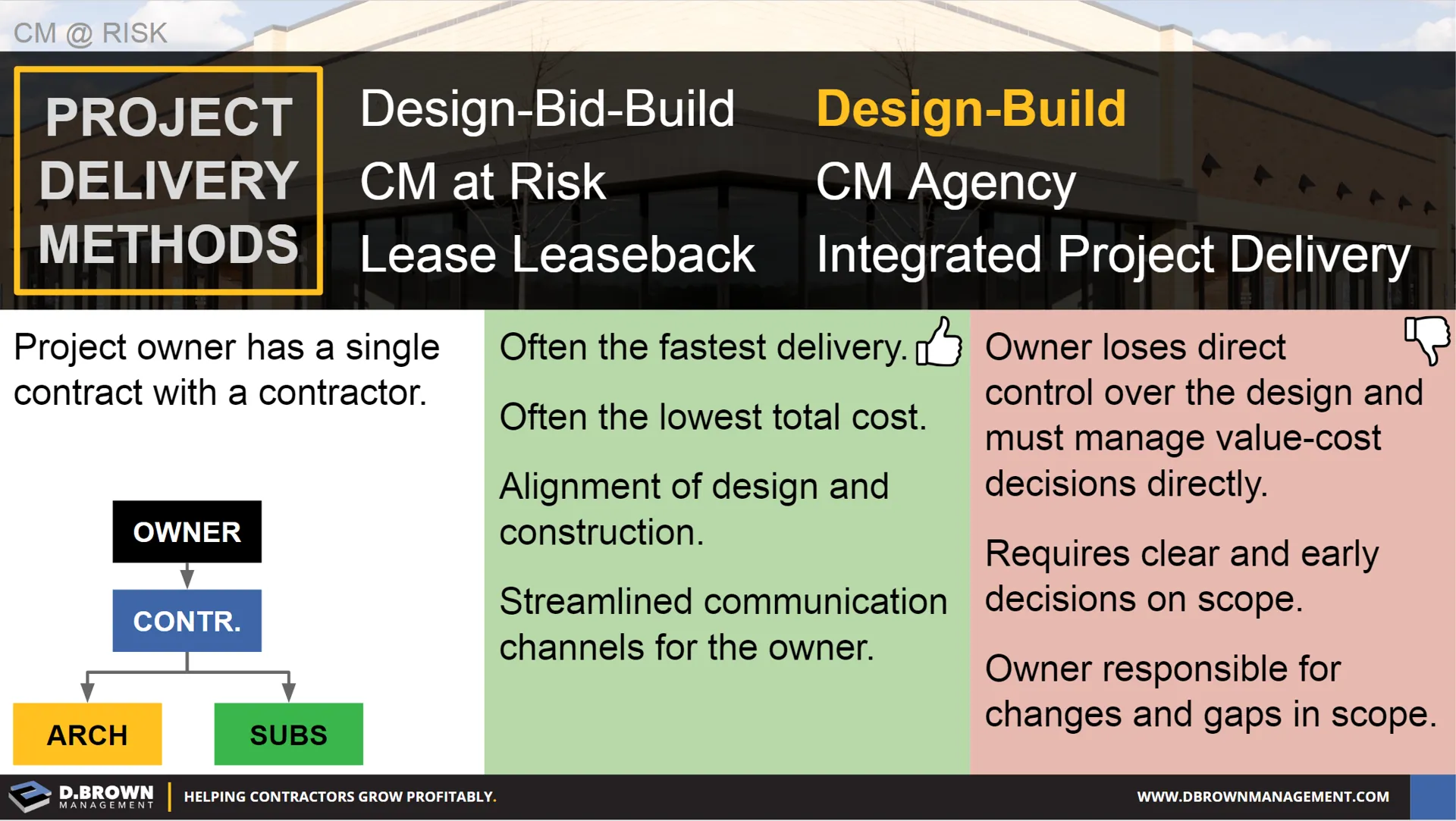
CM at Risk: Project Delivery Methods - Definition of Design-Build and pros and cons.

This integrates construction and design by putting the contractor fully in charge of the process which shortens delivery timelines and substantially cuts change orders.  

A study by Penn State and the Construction Industry Institute (CII) in 1997 showed many of the advantages of the Design-Build method, which are summarized in these slides from the Design-Build Institute of America (DBIA).

The key downsides of Design-Build include:

  • The project owner loses direct control over the design and must directly manage value vs. cost decisions.

  • The project owner must have clear and complete decisions on the scope of the project very early on.  

  • The project owner is responsible for changes and gaps in the scope. Deeply understanding the architectural design process and knowing how to manage it is a critical skill for any contractor delivering preconstruction services.  

Project Delivery - Design-Build
The preferred project delivery method. There is a reason 100 of ENR's Top 400 General Contractors use CMAR as the project delivery method for over 75% of their work. Leverage CMAR as part of your growth strategy....

Project Delivery - Design-Build
The preferred project delivery method. There is a reason 100 of ENR's Top 400 General Contractors use CMAR as the project delivery method for over 75% of their work. Leverage CMAR as part of your growth strategy....

Tactical and Strategic Question Categories
When planning, separate the questions you ask yourself into tactical and strategic categories. Answer the strategic ones first, back-checking them against the tactical ones to evaluate the viability of your plans.
Multipliers for Success at All Levels
As a leader in the construction business, you can think about success in three broad areas.
Functional Time Horizons
Starting out, the time horizons for strategy, winning work, and doing work are similar. As a contractor grows from 150 people to 500 people and beyond, those time horizons must stretch further apart while remaining integrated.