Quote about Winning - Bob Knight

There is an excitement about winning and definitely a need to instill that vision and passion in your team.

D. Brown Management Profile Picture

This is the tip of the pyramid and the guiding light.  
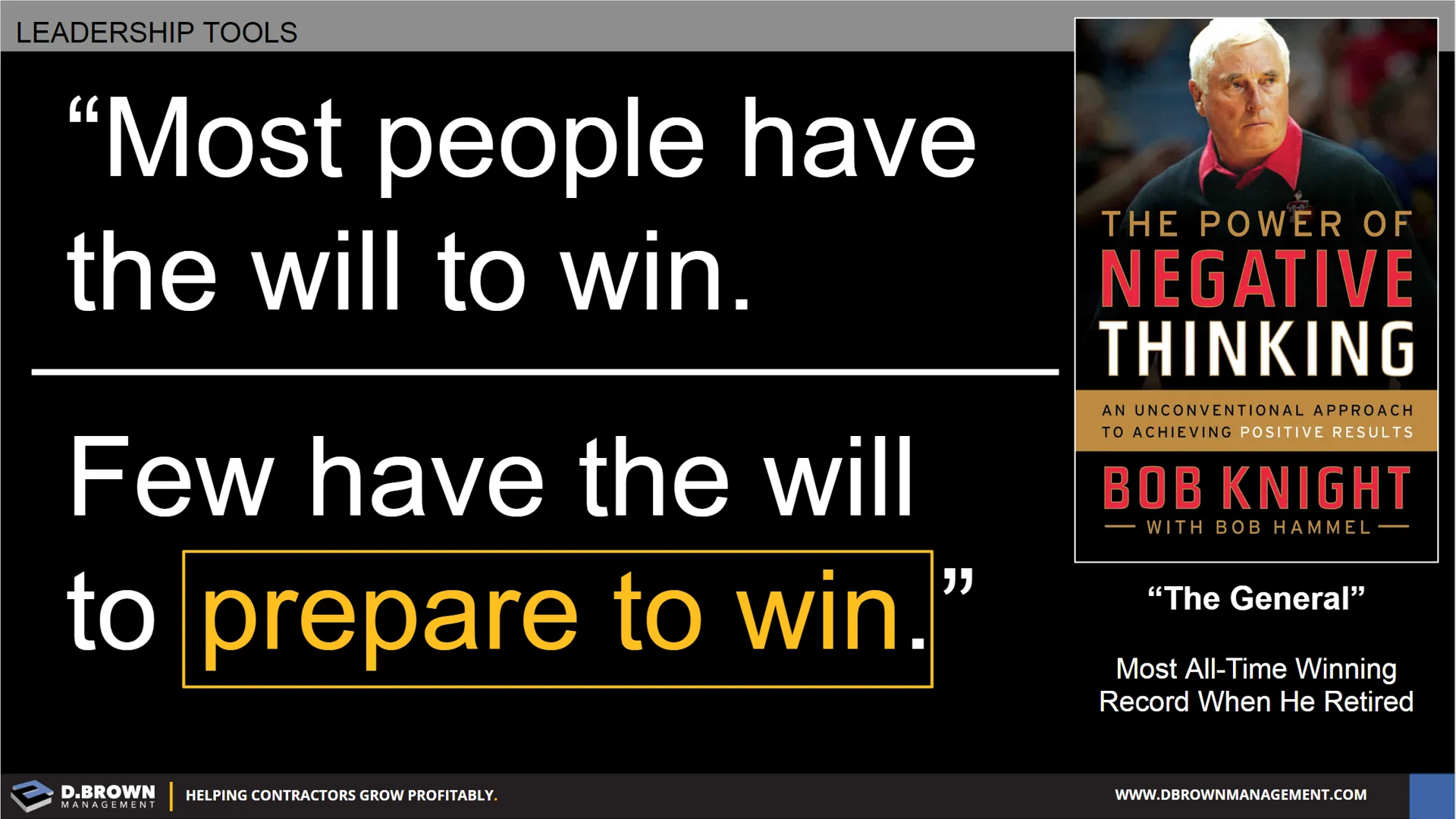
Quote: Most people have the will to win. Fe have the will to prepare to win. Bob Knight. Book: The Power of Negative Thinking by Bob Knight.

As Jack Stack describes in “The Great Game of Business” one thing that EVERYONE agrees on is that given a choice between winning and losing everyone chooses winning.  

This however is just the top of the mountain and reaching the summit is momentary. 

  • It’s the team’s ability to climb up the mountain making daily progress that guarantees continuous success.  
  • It’s the team’s stamina to continue forward making daily progress for years towards the summit.
  • It’s the team’s problem solving and critical thinking skills that help deal with the inevitable setbacks that will occur along the way.  

Do you love the daily climb up the mountain or are you only focused on the end goal?  

Loving the discipline of the daily climb is the only thing that will give you lasting joy and success.


Culturally we seem to have shifted to momentary pleasures rather than the deep joy that comes from accomplishment.  It’s good to look at all perspectives on leadership styles so we can learn a lot from Bob Knight.  

6 Daily Questions to Ask Yourself


Change Tracking Log & Management
Great change management starts with a good tracking system. The far more important part of change management is the rigorous review process at least 2X monthly with your PMs that will limit your risk, increase your opportunities, and train your team.
Alignment and Ownership and Creating Value
As a construction company grows, it becomes increasingly important to align everyone on the team. Alignment comes from being transparent with your guiding principles or values and living them every day, starting with ownership.
Lean Principle - Observation (Gemba Walks and Learning to See)
One of the most important tools for improving productivity is going to the jobsite or work area and observing for an extended period of time with the intent to understand but not to immediately interact. Observation progresses through about 7 stages.