The Risks of Vision and Strong Leadership

The strongest leaders at all levels in construction have a clear vision of where they are headed and are relentlessly focused on achieving their goals. They align their teams tightly around the vision, goals, and strategy. This may introduce risks.

D. Brown Management Profile Picture
Share


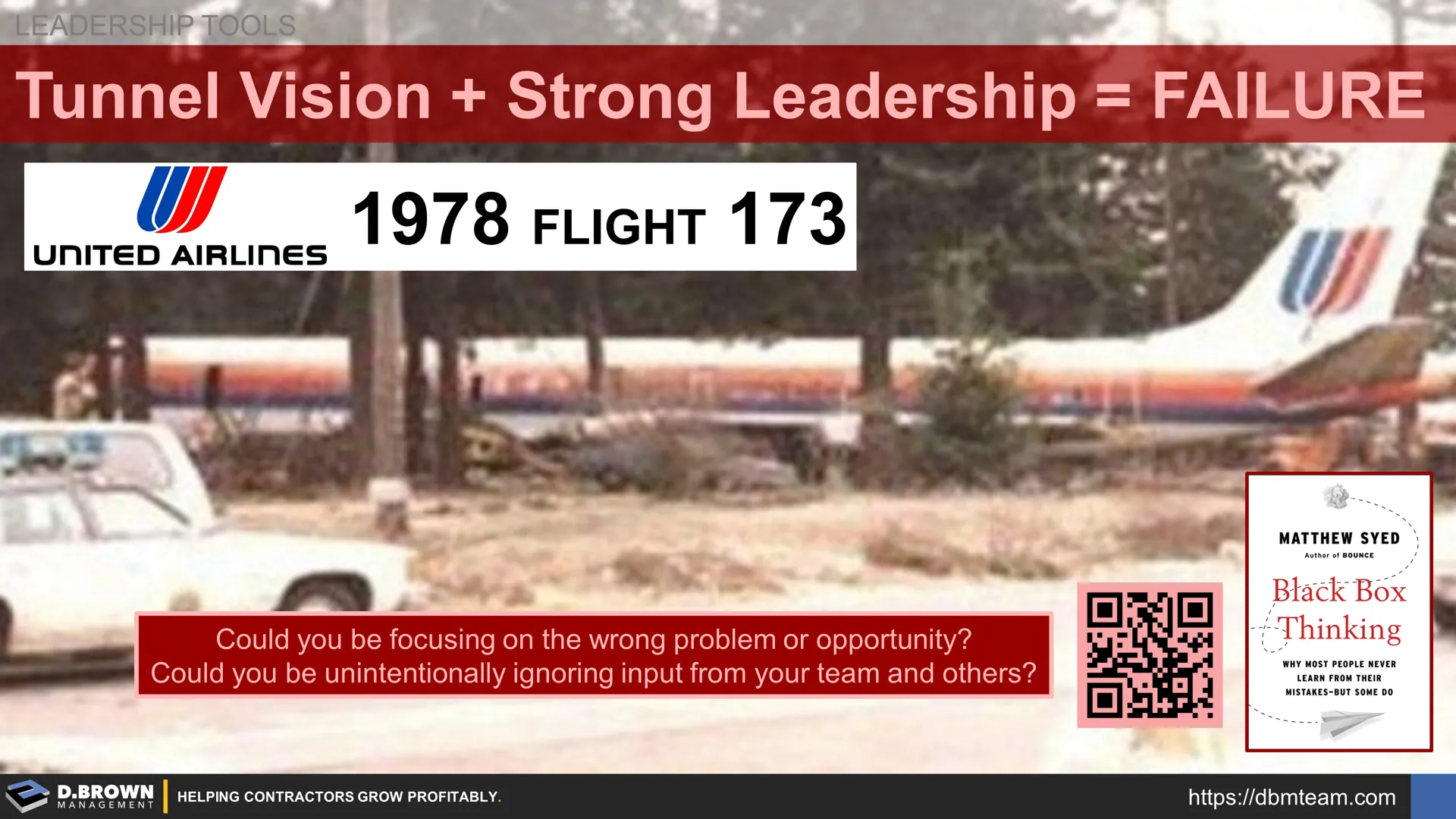
Leadership Tools: Tunnel Vision and Strong Leadership equals Failure. Example: The 1978 United Flight 173.

This is absolutely the leadership required to bring a project out of the ground, set up a new department such as prefab, enter a new market, launch a new branch office or found a contracting business.  

As a contractor grows the leadership styles must also adapt along with the entire team dynamics. The airline industry has learned this through many failures including United Flight 173.  

It would be too easy to blame the captain, but similar incidents had occurred in the past. Root Cause Analysis pointed to deeper cultural and training issues. There hasn’t be an incident like this since.  

Our mission is to help contractors build stronger businesses for the next generation. We spend a significant amount of our time helping prepare leadership teams for succession and have learned many lessons along the way.  

Every failed succession we have seen has been a failure of talent not being properly aligned and not a failure of available capital or deal structure.  

Learn more


Building the 1000X Contractor
The craft is the foundation of the construction industry - installation delivers final value for the project owner. Aligning craft talent to build a project is difficult. Building a contracting business that consistently delivers projects is 10X harder.
Contractors Are Like Sharks
Contractors never get to slow down. They must always be moving forward on the hunt for the next high-quality project, the talent to build that project, and always improving their operational capabilities to deliver that project successfully.
Talent Development Quote - Jack Welch
From 1981 through 2001 under CEO Jack Welch, GE’s market cap (value) grew 18% compounded annually from $14B to $410B. A large part of this profitable growth was due to the rigor placed on their talent development processes directly from the CEO.