
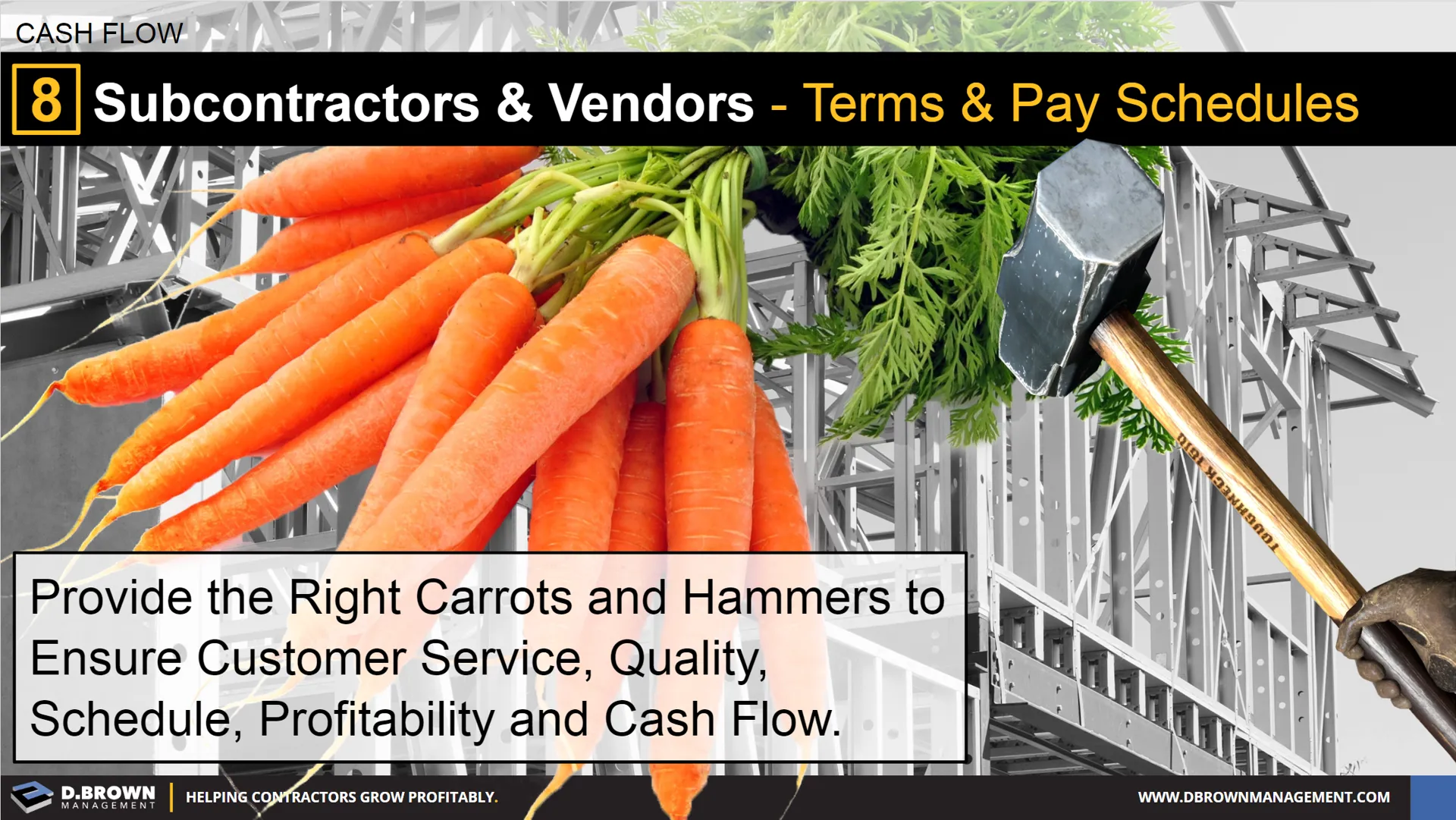
As important as it is for you to have a great Schedule-of-Values (SOV) with your customer, it is equally important to have great terms with your subcontractors and vendors. These must provide the right incentives (carrots), and when necessary, the right hammers to ensure the right balance between customer service, pricing, scheduling, and quality.
This requires the same creativity and negotiating skills used to get good terms with your customer. We frequently see two similar contractors with similar customers, subcontractors, and vendors getting VERY different terms.
Remember that you will not get 100% of the things you don’t ask for.
Remember to strike a good balance - this is a 2-way relationship.
- Eliminate or minimize pre liens or anything that will slow down the payment process on your end.
- Extend payment terms to 60 or 90 days if it doesn’t impact profitability or performance.
- Utilize tools like AMEX payments where applicable if it doesn’t impact profitability.
- Be proactive in developing their payment schedules (SOV) for them. Provide incentives to accelerate getting started and keep them engaged through close-out.
