
Optimum growth comes when we are stretching ourselves and others just beyond our current capabilities and then developing the needed capabilities.
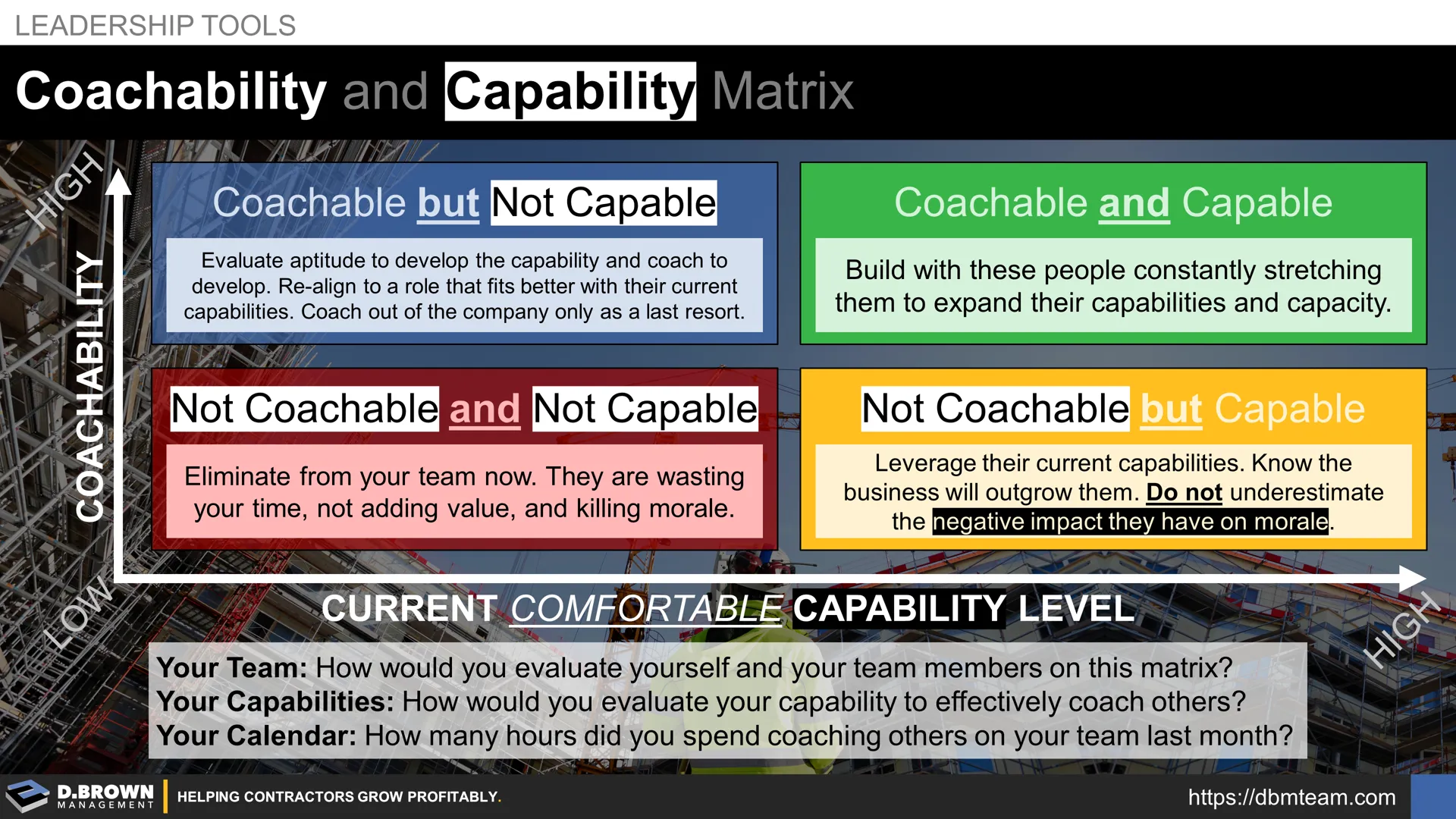
Two Prerequisites:
- Be clear on the definition of the capability including outcome expectations. See 5C Troubleshooting of Performance and Standards for more information.
- Evaluate which zone a person or team is in related to that capability (comfortable, learning, or panic zone). Your model for project execution and business management is not sustainable if it is not built around comfortable capabilities. You can't be scalable if you don't build in at least 10% of time stretching yourself and the team into the learning zone. See the Little Book of Talent, tip #13 for more. Develop your own definition of "Comfortable" in terms of how consistently a person can achieve the outcomes expected - in physical training terms, think Zone 2 versus Zone 5 training.
Remember: We all respond to coaching and feedback differently whether we are in the beginning of learning a new capability and failing regularly, or whether we are already at the comfortable level and moving toward mastery.
Great coaches give specific and actionable feedback frequently while also providing a broader vision and context.
“A coach is someone who can give correction without resentment.” - John Wooden
Being coachable starts with understanding that most of the world’s knowledge resides with others. The best-of-the-best in business, sports, and military are constantly seeking coaching to give them that extra edge, even an edge they didn’t know they needed.
Our highest levels of success come from both leveraging our strengths and mitigating our weaknesses.
“The only difference between feedback and criticism is how you hear it.” - Tim Grover
