Uncomfortably Exciting - Being a S.M.A.R.T. Leader

Being a manager or a leader is not a choice or a job description. Success comes from being both and balancing them effectively.

D. Brown Management Profile Picture
Share

Managers must set goals that are S.M.A.R.T. (Specific, Measurable, Achievable, Relevant and Time Bound.  Leaders must be stretching their teams toward objectives that are beyond what anyone believes they can achieve

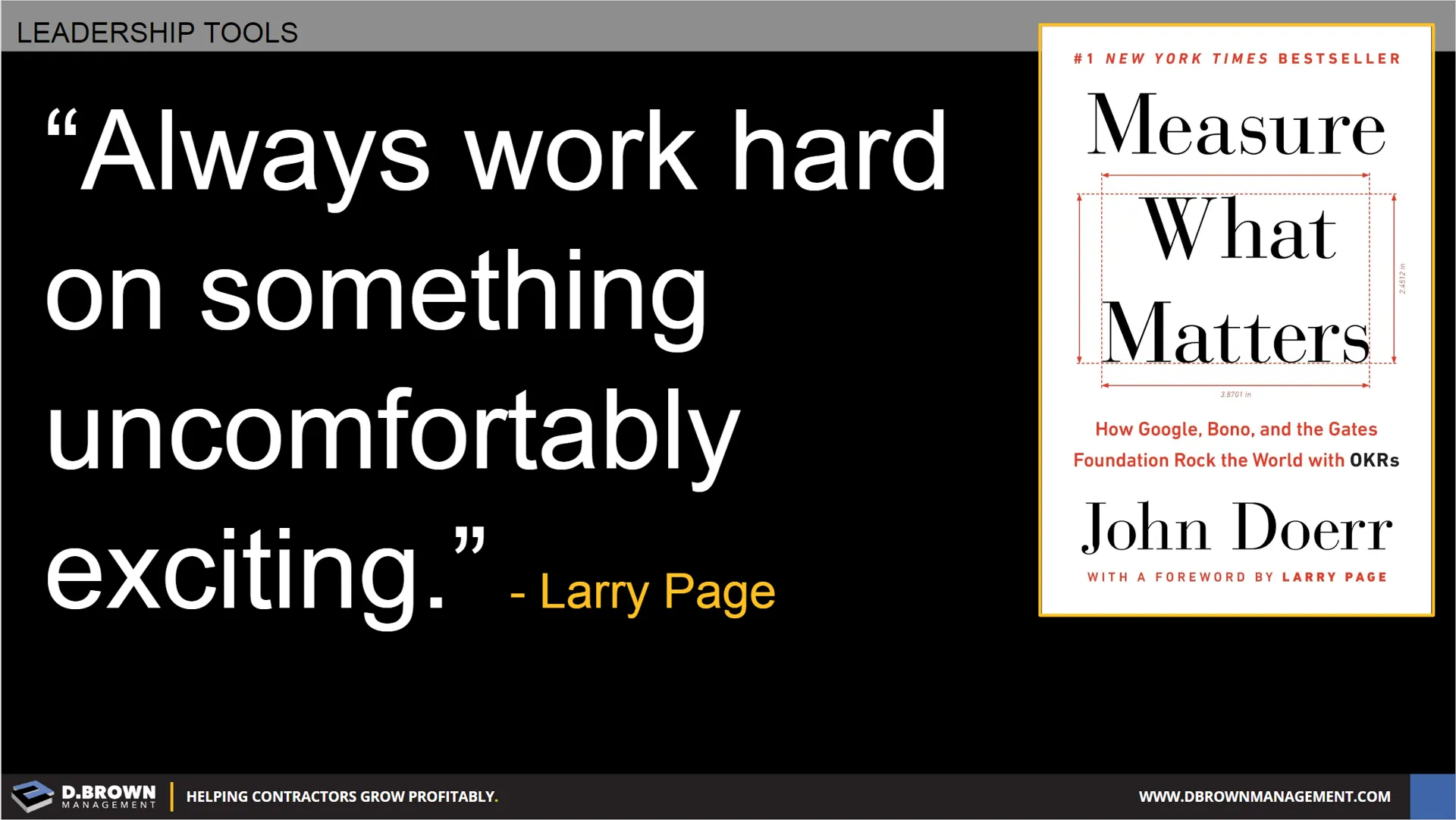
Quote: Always work hard on something uncomfortably exciting. Larry Page.

John Doerr and Larry Page describe these as two different types of OKRs (Objectives & Key Results):

Committed

These are the management level OKRs that must be accomplished no matter what:  

  1. Ask “What must be done?”
  2. Develop a plan
  3. Work that plan every day
  4. Follow up relentlessly. 

 “It is not enough that we do our best; sometimes we must do what is required.”

Winston Churchill

Aspirational

These are the leadership level OKRs that, as Larry Page describes, must make the whole team “uncomfortably excited.” 

Aim high and ask the harder question:  “What would have to be true for this strategy to work?” rather than the simpler question of “What is currently true?” 

This is the difference between how an architect approaches things from the top down versus a builder who typically approaches from the foundation up.  


Thriving with a Difficult Manager
In the ideal situation, everyone would have a great manager - both internally and externally. In the real world, we will all have to work for someone we consider a difficult manager. Learn to thrive in these situations.
Cash Flow Myth 1 - Profitability Does Not Equal Cash Flow
Cash flow does not equal profitability. While in theory these two critical scoreboard metrics are disconnected in reality cash flow is a pretty reliable predictor of profitability both good and bad.
Diffusion of Innovations Curve - Leading Change
The contractors that dominate tomorrow’s market will be those that have built strong capabilities for identifying opportunities or problems and then rapidly making lasting changes throughout the organization.