Production Tracking - Doing the Math as a Habit

Today contractors have amazing tools for tracking field production such as Rhumbix.

D. Brown Management Profile Picture
Share

We spend a lot of time developing very tightly integrated systems with our clients focused on production feedback.  
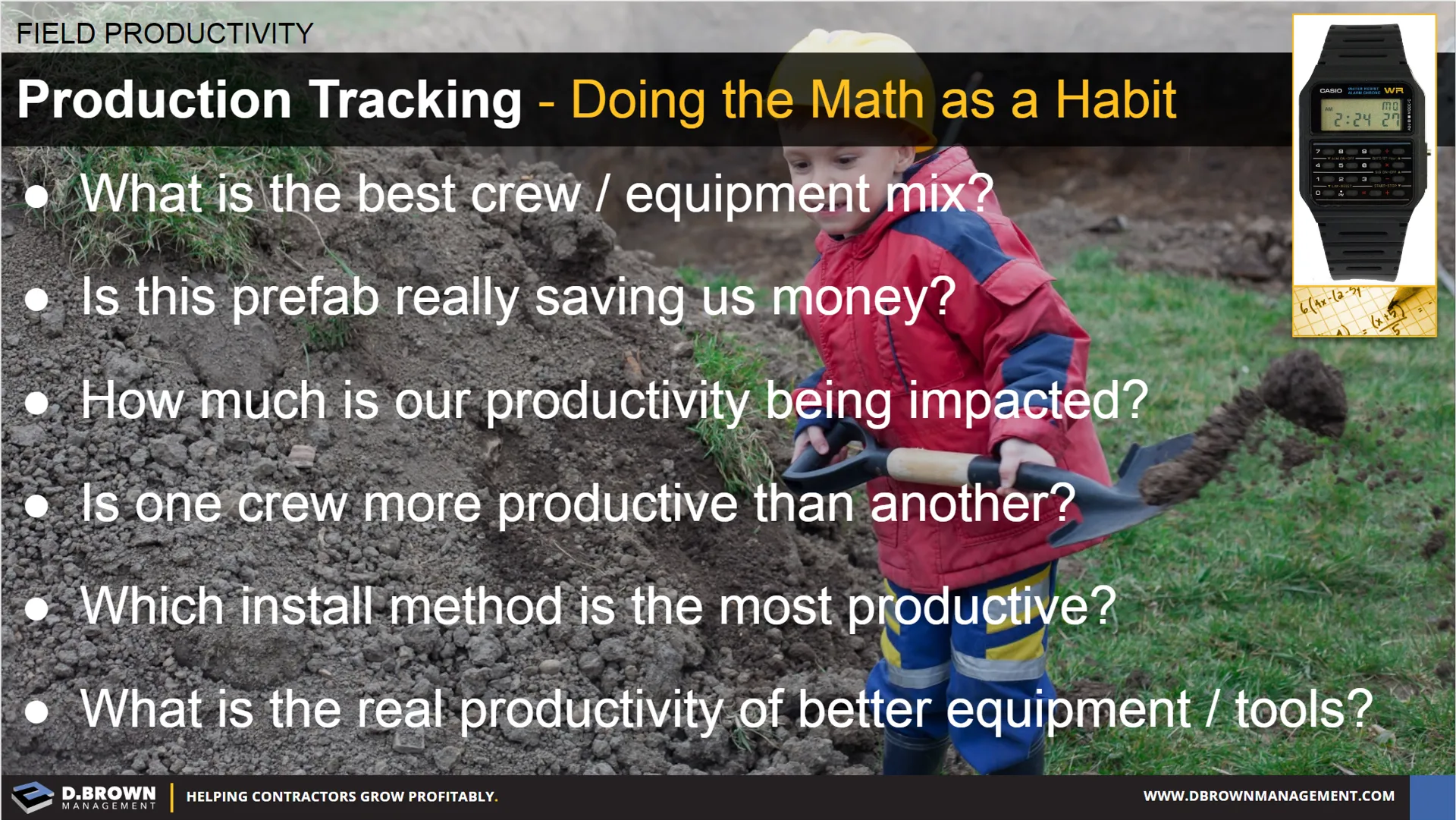
Field Productivity: Doing the math as a habit for Production Tracking.

With all this cool technology we must remember that the foundation of great productivity rests in the people.  Great field leaders have been tracking productivity and making enhancements with pencil, paper, calculators and watches for many years.  The integration of the watch and the calculator was one of the bigger technology enhancements from a few decades ago!  

It is the discipline of making production a daily habit that drives results.  

It is the learned ability to see production details that informs decisions. 

It is the capability to troubleshoot problems that forms the foundation for improvement.  

It is ultimately the ability to make improvements and set new standards that really matters.  

This all starts with the habit of doing the math with the right degree of detail to make great decisions.  Comparing what-if scenarios before starting. Comparing installation methods. Comparing crews. Comparing tools.  Comparing everything!


Improving Labor Productivity Workshop


Production Tracking - Doing the Math as a Habit
Field labor is the often the biggest variable on a construction project - making it the biggest risk and opportunity....

Production Tracking - Doing the Math as a Habit
Field labor is the often the biggest variable on a construction project - making it the biggest risk and opportunity....

Incentive Compensation for Contractors - Prerequisites
From Stephen Covey’s top selling book, “Seven Habits for Highly Effective People,” Habit #2 is to “Start With The End in Mind.” This principle applies to organizations in general and incentive programs in particular.
001 - Stages of Contractor Growth (Intro)
Every contractor grows through six general stages, with each requiring different strategies, systems, structure, and leadership focus. This 90-minute discussion covers the basic challenges with examples for all levels.
Definition - Standard
Level of Performance required. May relate to a job role (person), team, company, materials, equipment, facility, etc. Required by business model as part of achieving strategic objectives.